Historical Astronomers in Context – Johannes Kepler

Johannes Kepler, courtesy of NASA.

Johannes Kepler (1571-1630) was a 17th century astronomer born in the city of Weil der Stadt in the Holy Roman Empire, in what is today Germany. He is best known for his discovery of the elliptical orbits of planets and his planetary laws of motion. These three laws explained that the planets orbited the sun along an ellipse not centered on the sun (having the sun as one of the two foci instead), explained that an orbiting planet will sweep out equal amounts of the ellipse’s area in equal amounts of time, and described the relation between a planet’s orbit and its distance from the sun.  Although not adopted immediately by his peers, his laws ultimately became widely held as accurate and are still used today.  In addition he is also credited as the father of integral calculus, founder of the modern ideas of optics, inventor of correctional eye-wear, first to realize the moon’s relation to the tides, and coiner of the term ‘satellite.’

Contemporary Person:

  • Tycho Brahe (1546-1601) was another great astronomer of Kepler’s era. Brahe was well-known for his abilities in taking astronomical measurements and collecting data, Kepler worked under Brahe for about a year in 1600-1601, until Brahe suddenly passed away. His death was attributed to complications from a kidney stone, although no kidney stone was actually found during an autopsy. His symptoms may have matched mercury poisoning as well, although there is not enough evidence for this theory to be conclusive.

Contemporary Events:

Reflection:
This era in particular stood out to me as one of discovery and understanding, both of our own world and the heavens above. While England and Spain were settling the newly discovered Americas, astronomers like Kepler, Brahe, Galileo, and others were seeking to understand as much as possible about the planets and stars.  Some people theorize that Kepler may have poisoned Brahe in order to gain access to his research materials, or simply because he did not like working under him; while I think this is an unfortunate mark on the history of an excellent scientist it is not outside of the realm of possibility–especially since Brahe’s symptoms matched those of mercury poisoning, the episode set on during a long meal (an excellent time to introduce mercury into someone’s system), and a kidney stone was never found.  I also found it particularly interesting that this was all happening around the time that Sir Walter Raleigh was establishing colonies, as I am from the city of Raleigh (named for Sir Walter himself) in North Carolina.


Posted in Historical | Tagged , , | Comments Off on Historical Astronomers in Context – Johannes Kepler

Moon Landing Evidence! :)

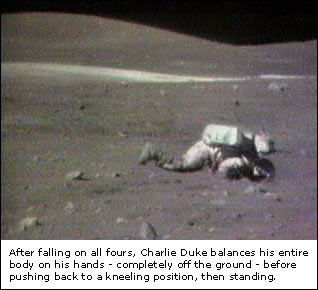
In class today (Wednesday), I showed some of the lunar landing footage available to we, denizens of the Internet, for FREE!  NASA is a public entity and as such, happily will show us many awesome things and has given us the Apollo Lunar Surface Journal (ALSJ).  Much of the text was written by former astronauts from the missions themselves and many of the best/crowd-favorite clips provide some context.

Whilst meandering the internet last summer looking for great astronaut videos to use in outreach, I came across this great website: Top 10: Videos From the Moon Landings (from How It Works Magazine).  I’d already found some of them in browsing the COPIOUS video clips in the ALSJ but this website really does have some of the very best :)  My favorites almost always involve the Apollo 17 mission it seems (this is a FANTASTIC Wikipedia page – check out the multimedia at the end!!)…  But I suppose that one was the one with the geologist and he seems a bit more jovial than the others sometimes :)

In the end, don’t let anyone tell you we didn’t land on the Moon.  You can find “Bad Astronomer” Dr. Phil Plait’s debunking here along with a page of several links to debunkers (and deniers!).  You can find the Mythbusters episode debunking here (never mind – you have to find that yourself, they keep taking the versions I know down).  You can find an excellent debunking website called clavius.org here.


Posted in Science, Terrestrials | Tagged , , , | Comments Off on Moon Landing Evidence! :)

Nicholas Copernicus in Context

  1. Historical Figures
    1. Copernicus: February 19, 1473 – May 24, 1543
    2. Johannes Kepler: December 27, 1571 – November 15, 1630
    3. Tycho Brahe: December 14, 1546 – October 24, 1601
    4. Galileo Galilei: February 15, 1564 – January 8, 1642
    5. Isaac Newton: December 25, 1642 – March 20, 1726
    6. Kepler, Brahe, and Galileo all lived during the same time period. The three were alive together for 30 years (1571 – 1601).
  1. Nicholas Copernicus’ most significant contribution to astronomy was popularizing the heliocentric theory: the idea that the sun is the center of the Universe. This theory is not entirely correct because the sun is not the center of the Universe but it was correct on the basis that the earth rotates around the sun. This was in contrast to previous ideas that the sun and heavens rotated around the earth.
    1. In 1518, the London College of Physicians was founded. King Henry VIII granted the college a royal charter so it could serve as a professional guild and learned society.
      In 1530, Girolamo Fracastro wrote the epic poem Syphilis sive morbus gallicus, or The French Disease. The poem provided one of the first descriptions of the disease syphilis.
    2.  In 1522 Ferdinand Magellan became the first man to completely circumnavigate the globe. He lived from 1480 to April 27, 1521.
  1. Learning about these occurrences helped me better understand the timeline of events that occurred during the scientific revolution. The amount of discovery alone was remarkable for its earth shattering perceptions of the world and how it works, but when one considers the short time span in which these discoveries took place, the transformation becomes truly incredible.

Posted in Class, Historical | Tagged , , | Comments Off on Nicholas Copernicus in Context

Historical Astronomers in Context

Image

  1. Tycho Brahe: Tycho’s primary contribution to astronomy is his collection of stellar and planetary observations. Accurate to within one arcminute, Tycho’s naked eye observations were unprecedented in quality. Tycho proved that comets lay in the realm of the heavens and sought to improve upon the current model of the solar system. Although Tycho never lived to completely fulfill his goal, his work lived on through Kepler who can be attributed with the discovery of elliptical orbits.
  2. Major Historical Events:
    1. 1585 – Under orders by Queen Elizabeth I, the British found Roanoke Colony on Roanoke Island, on the outer banks of North Carolina. The colony was a preliminary attempt to establish permanent colonization. The settlement is infamous for the disappearance of its inhabitants in 1590, which earned it the nickname “Lost Colony.”
    2. 1591 – Sir John Harington of Kelston creates the first flushing toilet. Harington introduces his invention in a book titled A New Discourse of a Stale Subject, Called The Metamorphosis of Ajax. The book not only proposes a new model of urban sanitation, but also provides a stage for needed social and political commentary.
  3. Sir Francis Bacon (1561-1626) was one of the most notable figures to have lived during the time of Tycho Brahe. Serving as the Attorney General and Lord Chancellor of England, Bacon is often considered the father of empiricism and the originator of the scientific method. He established the Baconian method – the idea of reasoning by deduction, or drawing conclusions from accumulating data – in his book Novum Organum.
  4. This period in history was incredibly interesting to review. The happenings during the 16th and 17th centuries seemed to be fundamental in creating the physical structure of our modern world. The cultivation of political theory through figures like Bacon and Elizabeth I, and the scientific fervor displayed by figures like Brahe and Kepler helped to prepare us for a global society. The exploration, colonization and scientific achievement created a more complete picture of our world and its solar system (heliocentric universe). The impact of scientific figures like Galileo Galilei and his contemporaries have shaped the path of modern science by challenging ideologies that had stood for centuries. Developments during this period reveal a time that was most fundamental in creating modern science.

Posted in Historical | Tagged , , | Comments Off on Historical Astronomers in Context

Tycho Brahe: Historical Astronomers in Context

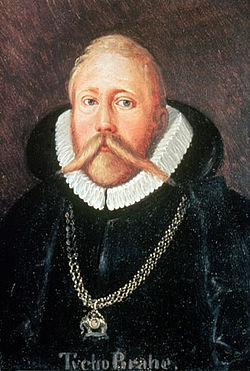
Tycho Brahe

sweet mustache!

the 411 on Tycho Brahe: Brahe proposed a theory different than the one we support today (where the Moon orbits the Earth which orbits the Sun with the other planets) ; Brahe supported a geo-heliocentric solar system with the Moon and the Sun orbiting Earth and the remaining planets orbiting the Sun still. He also debated that the Earth was constantly in motion based on its weight. However, he was accredited with the most precise observations prior to the invention of the telescope. It has been mentioned that although his theory on his reported data was not always accurate, the caliber of his findings helped advance us to current astronomy theories. I’m embarrassed to say that despite this fact, I’d never even heard of him! You can read more about some of his greatest highlights here; he’s fascinating honestly.

Tycho Brahe changed the way we observe astronomy mainly in the late 16th century. He was born December 14, 1546 and died January 8, 1642. In the timeline of some of the most important astronomers, Copernicus (1473-1543), Kepler (1571-1630), Galilei (1564 – 1642), and Newton (1642-1726), he fell right about in the middle of the astronomy craze.

I can’t say I’m a master at the 16th century, so I’m glad I decided to pick to do a little research on the one I’d never heard of. He lived in a busy time; when he was just three, the Book of Common Prayer (1st edition) hit the shelves (respectively), even though it only stayed current for 3 years before a serious rendition. In 1556, the deadliest earthquake to date, the Shaanxi Earthquake, struck China and killed over 830,000 citizens. In some areas, over 60% of the population perished.


Brahe was hardly the only influential person of that time. He shared the spotlight with one of our most studied (usually grudgingly on my part) writers: William Shakespeare (1564-1616). Shakespeare certainly drastically changed our textual history; he is considered one of the most influential and famous writers of English history. His most praised works were published in the last decade or so of Brahe’s life.

Overall, I felt a little dulled when I related our current history to that of the late 16th century. Obviously we are making history for the books everyday (Hi, Obama), but to me the most exciting stuff has already been discovered. It is incredible to me how much of our success came from the European and Spanish eras, despite how much of a powerhouse America is now. We owe most of our success, knowledge, and progression to the findings and bases set by historical celebrities. My first search was to glance at a Wikipedia spread of the late 16th century. Even though America was still in its beginning years, there were almost no significant American dates in that time period. It is interesting to me how recent (relative to the rest of history) some of our most historically prominent events took place. Religion is a huge aspect of world history, and the Book of Common Prayer wasn’t even introduced until 1549!


Posted in Class, Historical | Tagged , , | Comments Off on Tycho Brahe: Historical Astronomers in Context

Tycho Brahe: Historical Astronomers in Context

Tycho Brahe

sweet mustache!

the 411 on Tycho Brahe: Brahe proposed a theory different than the one we support today (where the Moon orbits the Earth which orbits the Sun with the other planets) ; Brahe supported a geo-heliocentric solar system with the Moon and the Sun orbiting Earth and the remaining planets orbiting the Sun still. He also debated that the Earth was constantly in motion based on its weight. However, he was accredited with the most precise observations prior to the invention of the telescope. It has been mentioned that although his theory on his reported data was not always accurate, the caliber of his findings helped advance us to current astronomy theories. I’m embarrassed to say that despite this fact, I’d never even heard of him! You can read more about some of his greatest highlights here; he’s fascinating honestly.

Tycho Brahe changed the way we observe astronomy mainly in the late 16th century. He was born December 14, 1546 and died January 8, 1642. In the timeline of some of the most important astronomers, Copernicus (1473-1543), Kepler (1571-1630), Galilei (1564 – 1642), and Newton (1642-1726), he fell right about in the middle of the astronomy craze.

I can’t say I’m a master at the 16th century, so I’m glad I decided to pick to do a little research on the one I’d never heard of. He lived in a busy time; when he was just three, the Book of Common Prayer (1st edition) hit the shelves (respectively), even though it only stayed current for 3 years before a serious rendition. In 1556, the deadliest earthquake to date, the Shaanxi Earthquake, struck China and killed over 830,000 citizens. In some areas, over 60% of the population perished.


Brahe was hardly the only influential person of that time. He shared the spotlight with one of our most studied (usually grudgingly on my part) writers: William Shakespeare (1564-1616). Shakespeare certainly drastically changed our textual history; he is considered one of the most influential and famous writers of English history. His most praised works were published in the last decade or so of Brahe’s life.

Overall, I felt a little dulled when I related our current history to that of the late 16th century. Obviously we are making history for the books everyday (Hi, Obama), but to me the most exciting stuff has already been discovered. It is incredible to me how much of our success came from the European and Spanish eras, despite how much of a powerhouse America is now. We owe most of our success, knowledge, and progression to the findings and bases set by historical celebrities. My first search was to glance at a Wikipedia spread of the late 16th century. Even though America was still in its beginning years, there were almost no significant American dates in that time period. It is interesting to me how recent (relative to the rest of history) some of our most historically prominent events took place. Religion is a huge aspect of world history, and the Book of Common Prayer wasn’t even introduced until 1549!


Posted in Class, Historical | Tagged , , | Comments Off on Tycho Brahe: Historical Astronomers in Context

Galileo Galilei in Context

Galileo Galilei (February 15, 1564 – January 8, 1642) was the first astronomer to observe celestial objects with telescope and publish his observations and sketches. He discovered the moon’s surface was not perfectly smooth, the sun experienced sunspots, Venus experienced phases … Continue reading
Posted in Class, Historical | Tagged , , , | Comments Off on Galileo Galilei in Context

Historical Astronomers in Context

Image

Image Source

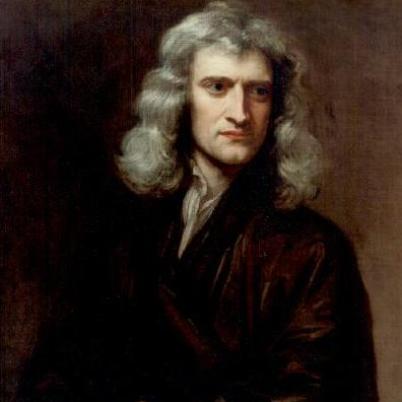
Isaac Newton was very prominent and highly respected for his work in physics and mathematics. He was born the 4th of January 1643 and died the 31st of March 1727, and is important to Astronomy for several reasons: of those reasons, arguably the most relevant is his contributions to the science through his laws of motion. Much of what Newton discerned about gravity and force has informed the foundations and discoveries in Astronomy since Newton’s time.[1]

(for more information on Isaac Newton specifically, please visit here)
Historical Events and Figures:
The first major historical event during the time period of Newton’s life occurred in 1666 and was the Great Fire of London. This fire was started in a bakery in the heart of London that burned more than 13,000 homes over a course of three days. There were only 6 verified deaths, however we must keep in mind that the poor and middle class were not recorded nor bothered with.[2]The second major historical event that occurred during this time period was the eruption of Mount Fuji in 1707 in Japan. The volcano is considered to be an active stratovolcano—which means that it is a tall structure built up on several layers of hardened lava and ash.[3]

Another very famous historical figure that lived during the period of 1643-1727 was Peter the Great, or Pyotr Alexeyevich Romanov. Born 9 June 1672 and died 8 February 1725, Peter is significant during this time in his rule as Czar of Russia because he lead Russia back from severe underdevelopment by instituting church reforms and Western standards to bring the country back on its feet and fuel its ability to compete on a world platform and improve the standards of living for his people.[4]

Reflection:

This study was interesting to me because it is easy to study certain subjects and people microscopic and isolated viewpoint. However, studying other relevant and nonrelevant events and people of this time period actually creates a context in which people like Isaac Newton formulated hypothesis and worked to contribute to the scientific field. It’s help shape my viewpoint in considering things like: had Newton been in fact born in London and lived during the time of the fire in 1666, there is a good possibility that he would not have survived and we would therefore not know him as the incredible physicist and mathematician we do today. Would we know some of the things we do today, and would someone else have postulated Newton’s Law of Motion?

[1] Bennett, Jeffrey O. “Chapter 4 Making Sense of the Universe.” The Cosmic Perspective. 6th ed. Boston: Addison-Wesley, 2010. 118-36. Print.

[2] www.luminarium.org/encyclopedia/greatfire.htm


Posted in Class, Historical, Physics, Science | Tagged , , , , , , | Comments Off on Historical Astronomers in Context

Kepler and the elliptical orbits

Johannes Kepler produced remarkably accurate results from the movement of the planets.  After concluding that the planets move in elliptical orbits and that the planets sweep out equal area in equal time, he calculated the distance of the planets from the Earth.  This lead to his final law, that the square of the period of the orbit is proportional to the cube of the average distance from the center.

Galileo was alive during Kepler’s life time.  Their work influenced each other, with Galileo encouraging Kepler to use a telescope to look at the planets.  Galileo discovered Jupiter’s moons, which helped put an end to the geocentric model.

During Kepler’s lifetime, the British (1607) and French (1608) founded several colonies in the New World, the Dutch founded New Amsterdam (1612), and the first African slaves were imported to Virginia (1619).  Additionally, the King James Bible was published.

It is cool to look at the history of science in terms of what was going on in the world.  So often, these are studied separately, or in century or longer blocks.  Science does not exist in a vacuum, so it influences society as well as society influencing what scientists want to study.


Posted in Class, Historical | Tagged , , | Comments Off on Kepler and the elliptical orbits

Johannes Kepler in Context

Deutsch: Johannes Kepler war ein deutscher Mat...

Johannes Kepler (Photo credit: Wikipedia)

Johannes Kepler (1571-16300) was absolutely vital to the study of astronomy in that he was the first to seriously propose that planets orbited the sun in ellipses, not circles. This greatly increased the accuracy of predicting astronomical events and helped to bring physics and astronomy a little bit closer together.

Major Historical Events and People During Kepler’s Lifetime

  1. Edict of Nantes– in 1598, the French King Henry IV issued this edict giving rights to Protestants in France. This was not complete religious freedom, but included such provisions as freedom of prayer for a minority, unthinkable just a few years before in predominantly Catholic France.
  2. The 30 Years War– a mostly religious war by many states in Europe, divided between Protestant States and Roman Catholic States. The major battleground was within the Holy Roman Empire (Germany), which was Kepler’s homeland. It resulted in different states being allowed to choose which religion would be dominant.
  3. King Henry IV of France: Born on December 13th, 1553 and died on May 14th, 1610. He was an extremely influential figure in world politics during his lifetime, playing a major role in fighting and ending the French Wars of Religion and advancing Calvinist rights in France after he ascended to the throne. He enacted the Edict of Nantes and was assassinated by a Catholic extremist.

Reflection: It was really interesting to realize how religious Johannes Kepler was during a time of such religious turmoil. He was a Lutheran during a time when religious freedom was barely even an idea in most European states. With all of these religious conflicts, he thought that studying astronomy could bring him closer to God and I think that is so fascinating. The way he could rationalize these new concepts (like elliptical orbits) with such strongly held religious beliefs (like the heavens moving in perfect circles) is just spectacular. I certainly envy his ability to overcome such deeply rooted preconceived notions.


Posted in Historical | Tagged , , | Comments Off on Johannes Kepler in Context