What is physics? I have been studying physics since elementary school, but I was never really taught about the definition of physics. My personal understanding of physics is that it is a study of the law of the nature.
The nature of physics is truly mysterious. Why do things obey the same law? Why can they be represented by certain equations?
More amazingly, our grandiose universe also obeys physics laws we find on Earth. This is actually the concept of “isotropy” in Cosmological Principle, which means that the same law of physics applies everywhere in the universe.
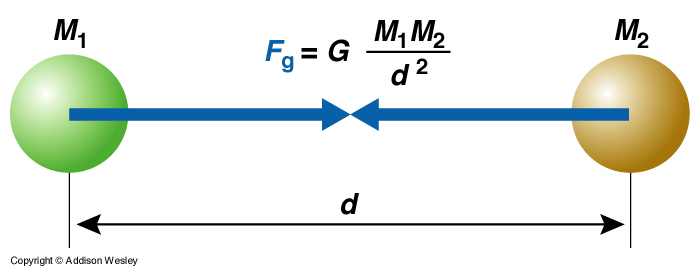
For example, gravitational force presents everywhere in the universe. The universal law of gravitation holds that the gravitational force of an object on another object is directly proportional to the mass of the object and inversely proportional to the distance between these to objects.

This law was discovered by Sir Isaac Newton, but was left unexplained until Albert Einstein came up with general theory of relativity.
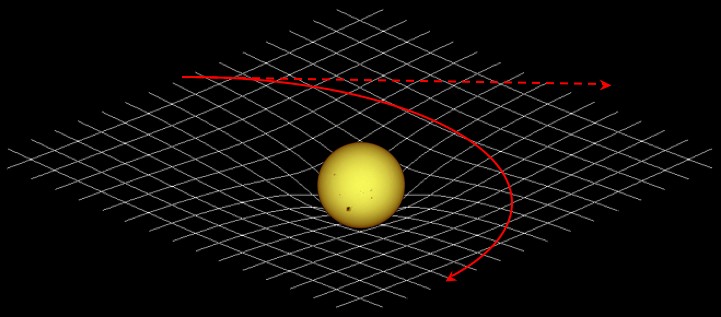
According to general relativity, a mass distorts the space around it. All objects are trying best to follow a shortest straight route when moving through the space. In a curved space-time, however, the object might fall into the trap of the curvature, thus proceed in a orbital motion around the mass that causes the curvature.

If you would like to learn more about general relativity, please watch this clip from The Elegant Universe, which explains much better than I do.
General Relativity & Gravity