There are many interesting things about light, particularly those wavelengths we cannot see. Looking at the light coming off of the Earth, we see what looks like a black body curve, but with chunks missing where greenhouse gasses absorb light. 
Some animals are able to see the infrared light that is given off by other animals, in essence, they are able to see heat. This effect can be replicated with heat sensing cameras, which are used in some security systems and frequent MythBusters episodes.
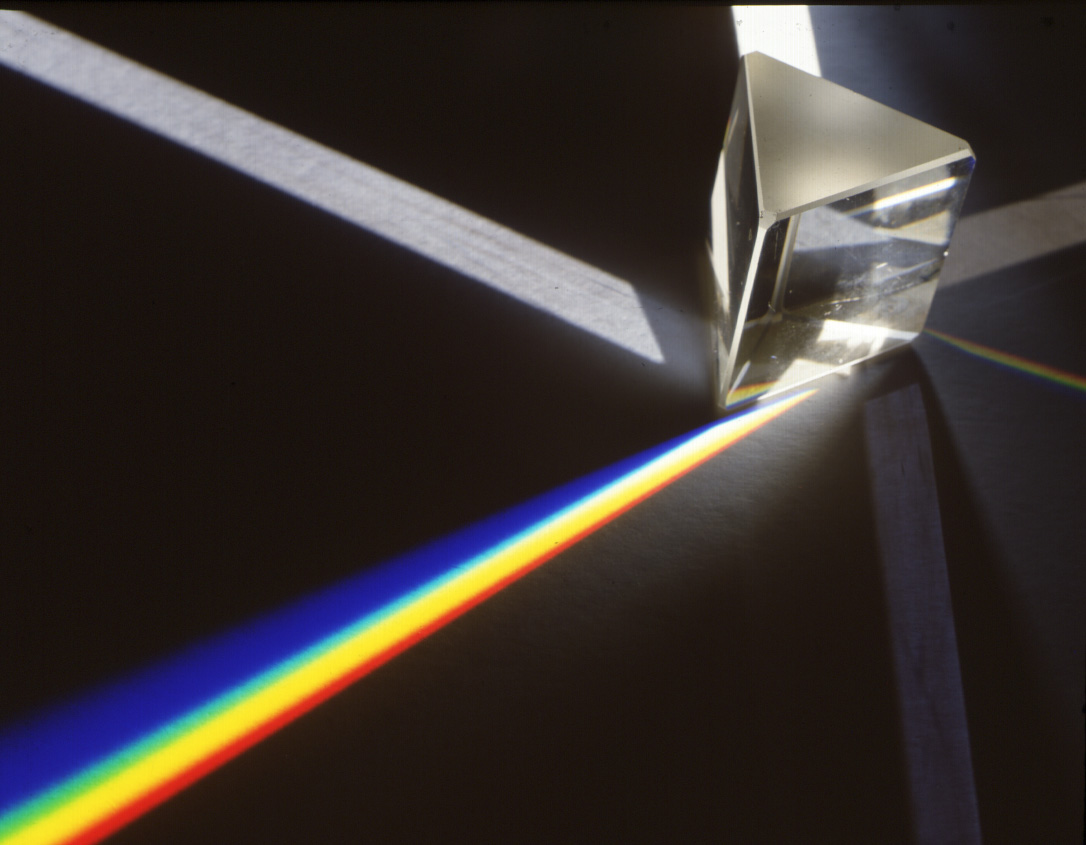
Sticking to visible light, we have looked at different wavelengths to learn about prisms, the size and temperature of stars, and Doppler shift, but where does pink fit into this picture? There is no pink light. Pink is not simply unsaturated red, which is why when you mix red and white paint, you just end up with light red, not pink. Did this bother anyone else in elementary school? To get pink paint, you had to add a little bit of blue. This is because pink is how our eyes interpret a lack of green. If you mix what our eyes interpret as red (that is, paint that scatters red light and absorbs all other wavelengths) with what our eyes interpret as violet (that is, paint that scatters violet, or less of paint that scatters blue, and absorbs all other wavelengths), our brains do not interpret that as two separate colors at once, but rather, pink. This is the same reason computers and TVs can use only three colors of light to depict the whole spectrum-our eyes interpret these separate wavelengths of blue, green and red light in the same way they interpret a single wavelength of light in the visible spectrum.
I highly encourage people to watch the video, I could not figure out how to embed it.