Blog #6: Aurora Borealis

After watching the time lapse videos on the Northern Lights (aka Aurora Borealis) I was fascinated to learn how this occurs.  As you might have picked up from the video, most of the people interviewed weren’t able to answer the questions with full understanding of why exactly this phenomenon occurs in the northern hemisphere, but can also occur in the southern hemisphere as well.  I thought it was interesting how our Earth’s magnetosphere causes this occur and the process of how the particles form the Sun strike the upper atmosphere to then excite the atoms in the molecules of the gases and when they become de-excited, light is given off.   Because of the clear atmosphere in Alaska due to the lack of lights and cold weather.  The atmosphere highly affects the visibility, so it would be very uncommon to see the Northern Lights in more southern areas.  Although red is extremely rare, that would be more likely to occur in Mexico due to the higher amounts of atomic Nitrogen than Oxygen.  I once saw the Northern Lights in the Upper Peninsula of Michigan and this was possible due to the lack of lighting from surrounding cities as we were in the middle of nowhere and also the climate was very cold as well.  This is a wonderful experience and everyone should see it at least once in their lifetime.


Posted in Observables | Tagged , , , | Comments Off on Blog #6: Aurora Borealis

Blog #5: A Necessary Truth to Understand

Regardless of your political opinions, Al Gore raises an interesting and relevant point of our Earth’s increasing climate change and explains why this is occurring in his documentary, An Inconvenient Truth.  Al Gore explains how susceptible our atmosphere is to changes due to our thin it is.  This video gives a basic description of the energy and light that is emitted into the Earth’s atmosphere, reflected by the surface and then absorbed by our atmosphere.  This is a great process that occurs on our Earth or else we would not have a warm temperate that would allow us to live.  However, it becomes a concerning problem when our atmosphere begins to thicken and the infrared light is trapped, thus unable to escape into space and increasing our Earth’s temperature.  As an advocate of global warming, this is a huge concern that we should all be aware of because as Al Gore shows, our atmosphere’s problems are due largely in part by our man-made destruction, such as power plants.   As technology increases, we need to become increasingly aware of what we produce and how this affects our atmosphere and the implications that come from that.


Posted in Science | Tagged , , , | Comments Off on Blog #5: A Necessary Truth to Understand

Why do we associate stars with being white?

Why do we associate stars with being white?

If you asked your neighbor what colors the stars in the sky are, 9/10 (with the 10th probably being an astronomer) would answer white. Why do we associate stars with being white? They actually emit all colors of the rainbow; the color emitted is based on the temperature of the star. So, you may think that the sky should appear as a glittering rainbow, but that’s not true either.  According to Phil Plait’s website: Bad Astronomy – Misconceptions, most stars in the sky are cool, reddish stars that we cannot even see. We think the stars are white because we have two different types of light sensors in our eyes. Rods detect brightness and cones detect color. The insensitivity of the cones are why we see stars as white; if a light (star color) is not strong enough to activate the cone, our eye will perceive it as white.

Magnification is also a factor, though. By observing through a telescope or binoculars, we can often “brighten” the stars and activate the cones into our eyes, thus being able to see the true colors of the stars.


Posted in Class, Stars | Tagged , , | Comments Off on Why do we associate stars with being white?

Mars Suitable for Life

Rock Sample

This image from NASA’s Curiosity rover shows the first sample of powdered rock extracted by the rover’s drill. NASA

NASA scientists have just finished analyzing a sample of rock Curiosity drilled last month, and the results are certainly promising for the theory that Mars once was home to life.

In the sample, they found elements like carbon, oxygen, nitrogen, and sulfur, all of which are essential for life as we know it.  This sample was taken from a rock found at the end of a now barren stream or lake, which could have been the perfect birthplace for life on Mars.  After all, many people think life on Earth started out in the oceans, so the same thing could have happened on Mars.  The minerals and chemicals found in the sample seem to indicate that the location was a mild one, without harsh conditions like acidity or saltiness that would make life hard to support. Scientists also believe that the oxidized and non-oxidized chemicals found in the sample could have provided a potential energy source for ancient microbes, if they behaved anything like those found on Earth.

These similarities in geology and chemical composition between the Earth and the Mars of the past seem to indicate that Mars could have once been home to life. Of course, this proof is only meaningful if the life that existed on Mars is anything like life on Earth. But since life on Earth is the only kind of life we know, it’s all we’ve really got to go on.

Curiosity will be continuing to examine the area surrounding the location of this rock  sample for further samples, so scientists can further determine if Mars was once home to life.


Posted in Aliens | Tagged , , , , , , | Comments Off on Mars Suitable for Life

The World Will End in Ice

I’m fascinated by the end of the universe.  It’s a pretty interesting mental exercise, theorizing about how everything might end (and us with it), especially since I definitely won’t be around to see any of those theories come to fruition.  Of course, I have a favorite theory, that being the “Heat death of the universe”.  It’s my favorite, because it combines two really cool things, the end of existence and entropy.  The end of existence is, I think, pretty self-explanatory, but the term entropy may be unfamiliar to some.

entropy

Entropy

Entropy is a concept in physics that is the measure of the amount of decay or disorganization in a system as the system moves continually from order to chaos.  According to the Second Law of Thermodynamics, in general, the total entropy of any system will not decrease other than by increasing the entropy of some other system. Hence, in a system isolated from its environment, the entropy of that system will tend not to decrease.  Since a finite universe is an isolated system, the Second Law of Thermodynamics states that its total entropy is constantly increasing.

Here’s a video explaining entropy in a British accent.

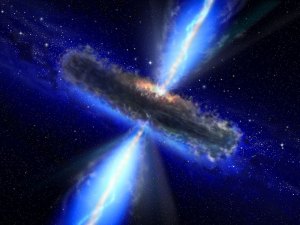
In our universe, then, as entropy increases, it spreads out heat.  Just as a cold object next to a hot one will warm up due to heat transfer, warm things in our universe, i.e. every star, including our Sun, is radiating heat out into the colder universe.  However, this won’t go on forever, as eventually, through both the burning of fuel and heat dispersion, the heat will have spread out so much that there won’t be cooler and warmer objects.  This is the basis of the “heat death” theory.  Everything will be the very same, extremely cold, temperature.  At that point, the universe will have attained a “steady state” in which there will be no energy differences and no ability to extract work from the universe.  Gravity itself plays a large role in entropy increase, because it causes matter to coalesce into stars, which in turn become black holes, where the entropy is proportional to the surface area of the black hole’s event horizon.
black hole

Artist’s rendition of a black hole

This is important because, if they are totally effective matter and energy traps, that makes them the likely termini of all entropy-increasing processes.  Luckily for all of us, however, heat death is projected to take at least 10100 years (this being the decay time of a supermassive black hole of approximately 1 galaxy-mass).

On a cheerier note, the heat death model does have its detractors.  The main argument against it is that, although entropy does increase in our model of our expanding universe, the maximum possible entropy that can exist is also increasing.  This results in an ever-widening entropy gap that pushes the universe farther away from heat death.  Ultimately, it is just difficult to make any accurate prediction of large-scale thermodynamics.

Of course, even if heat death won’t occur, there are still plenty of other ways for the universe to get us in the end…


Posted in Class, Physics | Tagged , , , | Comments Off on The World Will End in Ice

500 Days of…Solitude

Mars500_crew_with_red_goggles

European Space Agency

So this piece of news is a bit old, but I think its worth talking about: we’re one step closer to intersolar travel!  I’m not talking about a probe or rover, however.  In this case I’m talking about things of a human nature.  From 2007 – 2011, in a cooperative effort between the Moscow-based institute, the European Space Agency, and China’s space training center, an experiment called Mars500 was carried out in a mock spaceship in the Russian Academy of Sciences’ Institute of Biomedical Problems.  In a series of three phases, the experiment was designed to study the psychological and physical effects of long-haul space flights on human, specifically to the Red Planet and back (but only the participants in the third phase stayed in the capsule for the full 520 days).  In that last experiment, six men, three Russian, one Italian-Colombian, one French, and one Chinese, stepped into the mock-up and were not let out again until 18 months later.  When the “spaceship” door was once again opened on November 4, 2011, all six men emerged, pale and thinner than before, but virtually unscathed.

mars-500-hatch-opening

European Space Agency

In fact, results from the experiment showed that “there was no isolation within the isolation chamber“, and each member of the crew had at least a minimum amount of social contact.  The researchers also found that no deadly microorganisms had grown in the “spaceship” during the experiment, but they did find evidence of the formation of “biofilms” on structural elements inside the spacecraft, and more importantly, on components in the life support system.  This could present a risk for crews of real long-haul flights, as they may cause not only infections, but also lead to the malfunction of important instruments.  One last finding regarded sleep deprivation in the astronauts.  The mission changed the sleep patterns of some of the crew members and led to greater sedentariness, decreased alertness, and disturbed sleep quality.

Also, here’s a link to a video diary the ESA put together of those 500 days.

Unfortunately, any thought of a real long-haul flight is still far in the future, as our technology is still decades away from being able to protect astronauts from cancer-causing cosmic radiation, land them on a planet 54.6 million miles away, and bring them back home again.  However, although this experiment highlighted some challenges that need to be addressed as we get ever closer to sending a crew of astronauts out on a long-haul trip, I’m still really excited by the results.  At least from a human psychological level, I think the fact that six men of different nationalities could make it for the 520-day round trip without incident shows that with the right screening and training, it will definitely be possible to send manned international missions to explore the wonders of our own solar backyard.


Posted in Class | Tagged , , , | Comments Off on 500 Days of…Solitude

Planning for the Future

I was stumbling around the internet when I came across this series of pictures. If any one of you is interested in long term investments, high return savings, that sort of thing, this is a really good view of what the coming years will bring.

future

Investment Outlook for the really meticulous planners

Click here if animation doesn’t play.

But seriously, this image had a profound effect on me. A lot of people consider themselves lucky to be living in this age of innovation, on the pinnacle of existence. And believe me, I am not ungrateful. There is Naruto and Xbox and the Grand Unified Theory, and trips to the moon and probes to Mars; there is the internet, the standard bearer of the freedom of expression, and there is Game of Thrones and Harry Potter. And most important of all there is the asymptotic ideal of liberalism that, ever so faithfully, supports one’s occasional venture into the more “contestable” realms of morality, hiding behind the slippery paradox of the ownership of the intangible.

I am, of course, talking about The Pirate Bay.

Circumlocution at its Finest

Circumlocution at its Finest

I get excited when I write about things I like. Anyways: profound effect, ok. What I was trying to say is this: when you look at the larger picture of the universe, the largest picture that you can ever picture yourself in, you realize how insignificant of a speck you are. Despite living in an age of exponential progress, there is infinitely more that you have not yet beheld. The universe has so much yet to unveil. At every point in time, mankind has perceived itself as teetering on the pinnacle of progress, having reached the absolute limit of evolution. Every time, we have been proven wrong. Perhaps it is instinctive for us to identify with an unstable equilibrium, cautious creatures that we are. And it is this tendency of ours that forces us to ignore the broader realities of nature: that its progress is eventual, inevitable and perpetual.

I thought this picture is profound not because it is humbling, but because it showed me how much I will miss. I can’t fast-forward this show, I can’t torrent re-runs. I can only hope to experience the living daylights out of an infinitesimal period in the Universe’s life; a period that in all probability might be one of the more mundane parts of the universal timeline.

Just something to think about in times of inflated optimism.


Posted in Science, Universe | Tagged , , , , | Comments Off on Planning for the Future

The Power of the Telescope

hubble-space-telescope-001

History

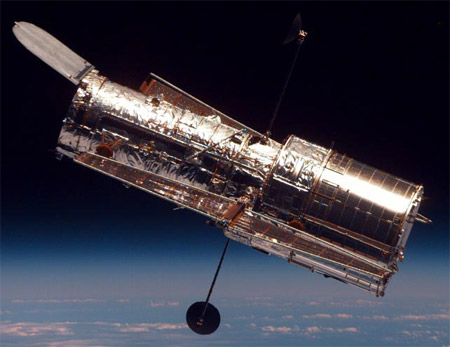
The first known telescopes came into invention sometime in 1608 by Dutch glass makers who had become quite skilled in making lens. In 1609 an Italian physicist and astronomer named Galileo decided to use this invention to look into the heavens. While it was rudimentary compared to the telescopes of today, this new tool allowed Galileo to make some of the most important discoveries in astronomy history, and change the fundamental beliefs of astronomy at that time.

Today

As time went on and technology became more advanced, these telescopes grew larger and more powerful. Eventually realizing that our atmosphere was interfering with some types of light in the universe, NASA decided to create a program dedicated to sending out a telescope into space. From 1970 to 1990 scientists worked diligently to design and build what would later be known as the Hubble Space Telescope. On April 25, 1990, five astronauts launched into space with the telescope that would end up measuring the age of the galaxy, searching for other solar systems like ours, and simply explore what we would never be able to on our own.


Posted in Class | Tagged , , , | Comments Off on The Power of the Telescope

Why are polarized sunglasses helpful?

What do polarized sunglasses do differently than regular sunglasses?

Polarized sunglasses affect the direction of light reflection. We know that light travels in waves in a random assortment of direction. Polarization is all of the horizontal reflection of light off of reflective surfaces. When light hits an object, it will reflect parallel to the surface. Polarized sunglasses act as a shield to horizontal reflecting, harmful light. By utilized polarizing filters, we block all horizontal reflecting light and allow only vertical reflecting light to come through. Regular sunglasses reduce light equally, but polarized help reduce the harmful glare. It is a bonus that polarized sunglasses seem to make colors more vibrant. If you observe a scene through regular sunglasses, you generally see colors with a less intensely glared view, but the Sun can still wash out the colors. Polarization messes with the horizontal reflections of light, blocking glare and reflections from other objects (such as clouds and the sky).

Overall, polarized sunglasses are a cool way to observe the reflections of Sun on objects. People say the world is a much prettier place through polarized sunglasses, but actually it is just less of the color reflected, glare affected world we usually look at!


Posted in Class | Tagged , , , | Comments Off on Why are polarized sunglasses helpful?

Happy Valentine’s Day! I bought you a Star!! <3

Your very own Star!

Websites exist that allow you to buy a loved one a star.. often for as low as $14.95, such as this one. You even get to choose from different gift packages to satisfy all your star naming cravings. That must really be a good way to win a girl over… buy her a star to gaze at lovingly every night.

Unfortunately, these companies are a huge scam. Companies can certainly offer you the option of buying the stars, but they never actually publish them or use “Dr. Grundstrom’s star” in astronomy. More often than not, the star that you bought is not even visible to the naked eye. But, say you call and complain to the company; its method of defense is to keep a huge spreadsheet of consumer names and their given star. You may have a star up there somewhere, but chances are, it’s at least a dozen other people’s “star” too. Scientists have no named every star; only ones that are important have names and all the others simply have categorical numbers based on sky coordinates.

The International Astronomical Union (IAU) is the official recognizer of astronomical objects. Usually, they accredit the person who discovered the object, i.e. Comet Levy, discovered by David Levy. History and important historical figures are also responsible for some of the names of astronomical objects. According to the Official Star Naming FAQ site, some of the moons of Uranus are named after Shakespeare’s characters in A Midsummer’s Night Dream. 

So, your loved one may have been super creative and surprised you with an astronomical (hehe) gift, but it turns out you pretty much have to create the next phenomena of English literature (Shakespeare), discover a brand new comet or Star, or be a Roman mythology princess to earn your star’s title in the real books. Sorry!


Posted in Class, Stars | Tagged , , | Comments Off on Happy Valentine’s Day! I bought you a Star!! <3