The 8 Wonders of the Solar System

This site shows us the 8 wonders of the solar system and the amazing sights explorers would encounter if they could ever travel to each location. This list includes Jupiter’s red spot which could fit two Earth’s inside of it and the peaks of eternal light which is the only known region in the solar system where the Sun never sets. What I found most amazing was the sunrise on Mercury. Since Mercury rotates three times per two very elliptical orbits around the Sun, there are two sunrises and sunsets a day. The Sun rises, arcing across the sky as expected, stops, moves back to the rising horizon, stops and returns again until finally sets. I recommend reading about each of the 8 wonders as they truly are amazing.


Posted in Space Travel | Tagged , , , | Comments Off on The 8 Wonders of the Solar System

Pluto’s Atmosphere

Recent studies show that Pluto’s Atmosphere may be much different than originally thought. Updated and modern models now show that Pluto’s atmosphere extends so far that molecules can be deflected onto it’s moon, Charos. This atmosphere would extend 6,500 miles into space, which is about 4.5 times the diameter of pluto.

In addition to this recent discovery, it is interesting to learn about Pluto’s atmosphere.

Because of Pluto’s very elliptical orbit, when Pluto is close to the sun the ice melts and a thin atmosphere forms, but when it becomes distant from the sun thereeze and solidify. Additionally, due to the size of its moon Charos, it might pull away Pluto’s atmosphere as well. Many other parts of its atmosphere are still unknown to scientists, as only guesses can be made due to its difficulty to observe. As a result, the New Horizons mission is sending a spacecraft to Pluto, to observe and collect more data that will give some tangible evidence to the life of Pluto.

Image


Posted in Class | Tagged , | Comments Off on Pluto’s Atmosphere

Space Travel: Warp Speed?

In the popular space flicks Star Wars and Star Trek often it is seen when ships enter “warp” speed: Travelling faster than the speed of the light to zip around the universe. While the sound barrier alone used to seem impossible to reach, our aspirations have led to increased hypothesis and debate upon the practicality of space travel by looking at how far our society has advanced technologically.

Models of space craft that reflect Alcubierre’s “Warp Drive”, which is a design that permits the spacecraft to warp spacetime around it, sending it at speeds up to ten times the speed of light. Although this theory had seemed impossible as a ball of antimatter the size of Jupiter was required to power it, recent discoveries demonstrate that a small twitch to the design of the Warp Drive decrease the amount of energy needed to 500 kilograms of antimatter. However, proof of Alcubierre’s model working on a large scale has not been seen as of yet. Although his theory certainly prooves valid on a small scale, more tests are needed in order to further advance this idea and turn it into a reality.

On the other hand, this travel presents a variety of extreme dangers. The antimatter itself is extremely dangerous, as a third of a gram of it can release energy equal the Hiroshima Bombing. Additionally, hydrogen at this speed becomes incredibly radioactive, which could cause near instant death for humans. Although certainly there are many factors still to be considered, it seems that the quest for interstellar travel has begun, and could be a reality in the future.

Image


Posted in Class | Tagged , | Comments Off on Space Travel: Warp Speed?

Voyager 2 and Its Solar System Exploration

Voyager 2 is the second spacecraft to explore the outer solar system, following the Voyager 1. However, Voyager 2 is the only spacecraft that has accomplished the task of studying Jupiter, Saturn, Uranus, and Neptune at close distances.

Voyager 2 was launched on August 20th, 1977 to study the outer solar system, as well as continuing to interstellar space. Voyager 2 was built as a Flyby spacecraft that weighs just over 2,000 kg. Among its many instruments for observing space, are: A UV and IR spectrometer, photopolarimeter, and a cosmic-ray telescope. After the construction of the craft, the launch, and other operations, this project cost an excess of $875 million. Although expensive, this mission has been extremely successful thus far. Voyager 2 has captured many images of all Jovian planets as well as some of their moons. For example, a ten hour volcano video was taken on the moon Io. This confirmed a change in the moons surface with the observation of active volcanoes. Another example of Voyager 2′s success, is the discovery of 10 new moons along with 2 new rings around Uranus. There were many other discoveries that such as these, and it proves the success of the Voyager mission. Voyager 2 passed Neptune in in 1989 and has been continuing its journey farther outside of the solar system. It is exciting to think about what the Voyager will discover next.
One cool fact that that most people may not know about the Voyager 2, is that NASA put a greeting on the spacecraft in the event that it comes in contact with life forms. The greeting is on a copper disc that contains music and pictures that portray life on earth. This disc is accompanied by a disc player and instructions to guide any extraterrestrial life in playing the disc.

Voyager 2 Website

Voyager 2 Photo


Posted in Instruments, Observables, Science, Space Travel | Tagged , , , , , , | Comments Off on Voyager 2 and Its Solar System Exploration

There Aren’t any 5 star Restaurants in Space…

There Aren't any 5 star Restaurants in Space...

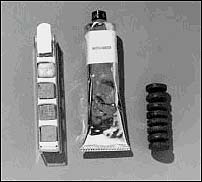
Can you imagine eating breakfast, lunch, and dinner by squeezing it out of a tube? If your childhood dream of becoming an astronaut had ever come true, that’s exactly what you’d be doing rather than enjoying your Randwich. Menu options for astronauts visiting Mercury, according to NASA, include freeze-dried powder, cube sized food, and tube stuffed semi-liquids. Although the tubed foods were disliked, they were practical because they eliminated the risk of crumbs ruining the space equipment; the cube-sized food and powders could not claim the same. By the time the Gemini project was around, astronauts were comparatively eating like celebs with options including shrimp cocktail and butterscotch pudding.

The Space Shuttle astronauts go through an entire process to determine what they eat (think Katniss and the other tributes in the Hunger Games). The astronauts must meet RDA (Recommended Dietary Allowances) with each meal. You can figure out your exact caloric requirement in space using the National Research Council’s basal energy expenditure (BEE) formula. Women: BEE = 655 + (9.6 x W) + (1.7 x H) – (4.7 x A) and Men: 66 + (13.7 x W) + (5 x H) – (6.8 x A) where W = weight in kg, H = height in cm, and A = age in years.

An astronaut’s kitchen contains just two appliances: a water dispenser used to rehydrate foods and an oven used to reheat foods to appropriate temperatures. Each astronaut plans meals for a 7-day rotating schedule and eats on a meal tray that is strapped on to the wall or the astronaut’s suit. The tray not only serves as a serving surface, but also allows the astronaut to eat food items as he wishes. The tray holds the various food items in place, restricting them from floating away. Without a tray, you would have to eat all of your shrimp cocktail, then all of your mashed potatoes, then all of your peas, and wait to eat your butterscotch pudding… and that’s just no fun


Posted in Class | Tagged , , , | Comments Off on There Aren’t any 5 star Restaurants in Space…

The Runaway Greenhouse Effect and Ice Ages

Some planets behave like they have some sort of geological bipolar disorder.  If you look at long-term climate changes and the potential of a runaway greenhouse effect, you may see what I mean.  If a planet like Earth were to heat up in some random, isolated incident, more evaporation would occur, the atmosphere would expand, and since water is a greenhouse gas, the planet would heat up, more evaporation would occur, and since water is a greenhouse gas, the planet would heat up, more evaporation would occur…you get the point.  Eventually most water in the atmosphere would achieve escape velocity and leave us.  This is referred to as the runaway greenhouse effect.  There is very little chance this would occur on Earth any time soon because we have our own negative feedback system in the carbon dioxide cycle.  However, Earth does experience its own significant climate swings.

In case you didn’t know, Ice Age isn’t just a fantastic movie.  Since the CO2 cycle works very slowly, a decrease in volcanic activity can lead to less CO2 in the atmosphere and less of a greenhouse effect.  When you combine this effect with changes in Earth’s axial tilt, you just might end up with a period of pretty cold temperatures.  If these temperatures were cold enough to cause oceanic freezing, you might end up with an Earth similar to the image above.  The resulting increase in reflectivity would have further reduced Earth’s temperature through reducing the amount of visible light absorbed by the Earth’s surface.  Evidence suggests that this actually happened around 750 million years ago.

So why didn’t Earth continue to experience decreasing temperatures, a sort of negative runaway effect?  Luckily, this snowball effect was only skin-deep, and Earth’s interior never cooled off, so there was all this CO2 inside the Earth ready to be released.  Once there was a sufficient increase in volcanic activity, the greenhouse effect became stronger and stronger until the Earth’s surface melted.  Earth’s temperature began to increase drastically with the resulting decrease in its surface’s reflectivity, leading to an Earth that was even hotter than it is today.  Hot to cold, cold to hot?  Geological bipolar disorder.

I had a good laugh at this person below…


Posted in Class | Tagged , , , | Comments Off on The Runaway Greenhouse Effect and Ice Ages

Sources of Climate Change

Since many sources claiming to distribute accurate information regarding climate change tend to have some sort of their own political agenda, I will concentrate mostly on the discussion of climate change presented by the textbook, The Cosmic Perspective: The Solar System.  Earth’s climate has been relatively stable throughout its history when compared to Mars, for example, which has lost the majority of its once liquid water-friendly atmosphere.  The greatest swings in the climate of our planet, at least since our atmosphere has developed oxygen levels sufficient to sustain terrestrial life, have been ice ages.  The Earth cools down for a while, then heats back up through the carbon dioxide cycle.

The Carbon Dioxide Cyclehttp://tinyurl.com/c7ep373

The Carbon Dioxide Cycle
http://tinyurl.com/c7ep373

The most basic explanation of the CO2 cycle, as seen above, is that CO2 is released into the atmosphere by outgassing.  Some of this atmospheric carbon dioxide dissolves in rainwater, leading to acid rain, which erodes the Earth’s rocky surface and increases the amount of carbon in Earth’s water.  This carbon then reacts with calcium to form carbonate rocks, which are eventually sucked down into Earth’s mantle through plate tectonics, where they heat up and are eventually outgassed through volcanoes, continuing the cycle.

This cycle acts as a natural equalizer for Earth’s temperature because if the Earth heats up due to excess CO2 in the atmosphere, water will evaporate more easily, leading to more precipitation, which dissolves CO2 from the atmosphere, leading to less of a greenhouse effect.  Likewise, if the Earth cools down, there will be less precipitation and less CO2 dissolved from the atmosphere, increasing CO2 levels, leading to more of a greenhouse effect.

Though many other factors can cause long-term climate change, such as solar brightening, changes in Earth’s axial tilt, and changes in Earth’s reflectivity, when climate change becomes more complex and the human political agenda can come into play is when we discuss the effects of human activity on climate change and greenhouse gas levels.  As humans increase our consumption of fossil fuels, excess greenhouse gases are released into the atmosphere, throwing off the CO2 cycle.  This spike in greenhouse gases slows the escape of IR light from the atmosphere, leading to an increase in atmospheric heating.  This heating leads to more precipitation and the melting of polar ice, increasing sea levels and reducing Earth’s reflectivity, which leads to more absorption of the Sun’s visible light, more IR light being emitted by Earth, and more warming.  It is necessary for humans to reduce greenhouse gas emissions in order to allow the CO2 cycle to naturally guide Earth’s climate.


Posted in Class | Tagged , , | Comments Off on Sources of Climate Change

(Infa) Red-Hot Photography

For my 6th blog post, I want to share one of my favorite videos I have found this semester. The video, titled, “Movements in Red”, by photographer Andrew Hurtleff, shows what our world would look like if we could pick up infared wavelengths. Near-infared light, as seen in the video, is detected by light-sensitive chips in Hurtleff’s camera, providing a unique view of Earth beyond what our eyes can see. As we have learned, our eyes are only able to pick up colors in the visible light segment of the electromagnetic spectrum. However, this is only a tiny portion of the forms of light available in the spectrum. Visible light has wavelenghts ranging from around 400 nanometers to about 700 nanometers. Infared light has wavelengths just a bit longer than the red end of our visible light spectrum. This difference is critical, as the various portions of the electromagnetic spectrum interact differently with matter.

I have included a few of Hurtleff’s other infared images below. (Note that the blue added in some of the pictures is not natural and was added for an artistic touch!). As someone who is not strong in science, I really like finding artists, authors, or anyone who combines art and science. I have studied photography for several years, and I really like how this teaches key principles of astronomy through artistic expression. For me, Hurtleff’s work serves as a captivating and intriguing way to study the electromagnetic spectrum, and I hope other people enjoy this as much as I did!

Image

Image

Image


Posted in Class | Tagged , , , , , , | Comments Off on (Infa) Red-Hot Photography

Nuclear Fusion Here on Earth

The prototype of a new nuclear fusion system


Scientists are researching nuclear fusion like never before. This research is motivated by the promise of large amounts of clean power. In fact, the fuel used in fusion reactors is deuterium, an isotope of hydrogen that can be obtained from seawater. NBC emphasizes this clean power, reporting that “half a bathtub of seawater could theoretically create the energy equivalent of 40 train cars of coal.” This is a huge conservation of resources, plus there is no pollution involved! The only problem is that it is difficult to reach the break-even point where more power is produced than is needed to run the reactor.

Fortunately, scientists have recently gotten one step closer to achieving efficient fusion here on Earth. Scientists in New Mexico have created a reactor called the “Z machine” that uses extremely high electric current to collapse a metallic cylinder in order to squeeze together the deuterium fuel. This extreme squeezing triggers the fusion process within the fuel. Essentially, this is an effort to recreate similar pressure and temperature conditions to those within the Sun. This is no small task, especially when you are trying to create a reaction that will produce enough energy to exceed the large amount of energy put in to keep the process going. The “Z machine” uses lasers to heat the cylinder up to the extreme temperatures needed before it crushes the fuel with magnetic fields created by high electric currents.

Hopefully, this method of starting the fusion reaction and imitating the extreme conditions of the Sun will be efficient enough to power full reactors. Even still, we can never come close to the scale of fusion achieved by our Sun and every other star. While creating our own fusion reactor can be difficult, it allows us to truly appreciate the power and complexity that we observe in the Sun.


Posted in Physics | Tagged , , , | Comments Off on Nuclear Fusion Here on Earth

Who wants to be a Martian?

So this guy, Bas Lansdorp, has created a company that will send people to Mars starting in 2022. Unfortunately, his company does not offer a return flight, meaning that those who accept this mission will become permanent residents of Mars (assuming they make it), will live out the rest of their lives, and die on Mars. To some this may sound appealing, but personally I do not think I could do it. I can just imagine looking out the window of the spaceship and seeing Earth becoming smaller and smaller. Knowing that I would never see my home planet again would be too much for me. However, according to this article they have received plenty of interest from potential astronauts. I guess lots of people are braver than me, or just really desperate for adventure or fame. In any case, I admire their bravery, but I think I’d rather spend the rest of my life here on Earth.


Posted in Space Travel | Tagged , , | Comments Off on Who wants to be a Martian?