Voyager 1

Image

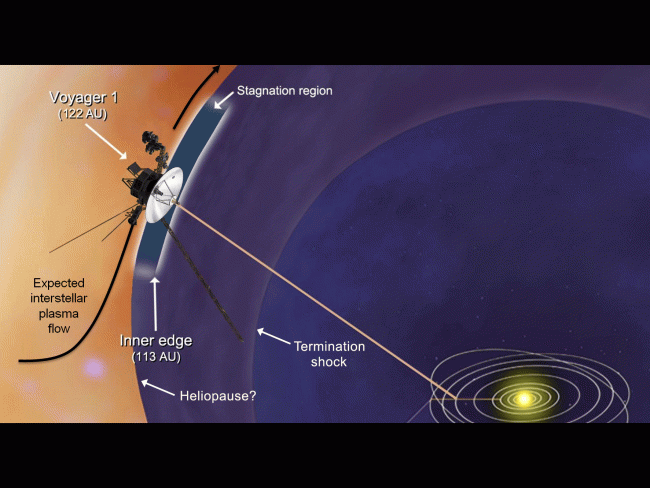
Voyager 1 launched in 1977 in order to collect data and research the outer planets of our solar system. Currently, 11.5 billion miles from Earth, scientists are having some difficulty determining when exactly the Voyager is going to leave the solar system. It has completed its mission of surveying the outer planets, such as Saturn, Jupiter, Uranus and Neptune. Now, it is just flying through space at almost 40,000 miles per hour. Press releases have been sent out and then quickly taken back declaring the Voyagers escape from the solar system- but why is it so hard to predict? First, we don’t really know where our solar system ends. We are not sure how big it is, and where exactly the line is that separates us from the rest of outer space. Scientists claim, however, that we will know that the Voyager has exited the solar system when the magnetic field flips from east-west to north-south. Some scientists predict this won’t happen for another few years. Regardless, every minute the Voyager continues to move through space we are exploring completely new territory.

Sources: voyager-1 nytimes


Posted in Class, Instruments, Universe | Tagged , , , | Comments Off on Voyager 1

Terrestrial Planets around Metal Poor Stars?

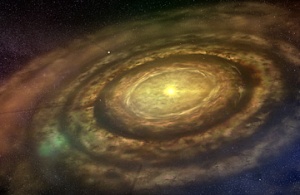
In our book, we learned that it is unlikely for planets to form around a star that is deficient in heavy metals.  In order to form terrestrial planets, you need a second-generation star to form from the nebular ashes of another star that produced heavy elements in its final moments.

However, new research from studying Kepler stars has led scientists to discover that even stars with 25% of the original heavy-metal content of the Sun have successfully created planets.  The article also seems to infer that the some heavy-metal rich terrestrial planets were discovered around these stars.  This potentially expands the planet-making area further out to the borders of our galaxy.

Protoplanetary Disk


Posted in Exoplanets | Tagged , , | Comments Off on Terrestrial Planets around Metal Poor Stars?

My Favorite Parts of the Semester

I learned a lot about the universe in this class, but what really stuck out at me throughout the semester was how principles that I had previously learned in physics are used to discover new planets or what they’re made of. For example, I learned about the Doppler Effect in my 7th grade science class by thinking about the changing pitch of a police car as it drives by. I never would’ve thought that the same principle could be used to prove that a planet is orbiting a star.

I also enjoyed learning about all the different factors that need to be taken into account in order to determine the probability of life existing in our galaxy. I had never considered that we have been around for such a short time of the galaxy’s life span that it is very likely that even if intelligent life did evolve on another planet, we would not be around in the same time period.

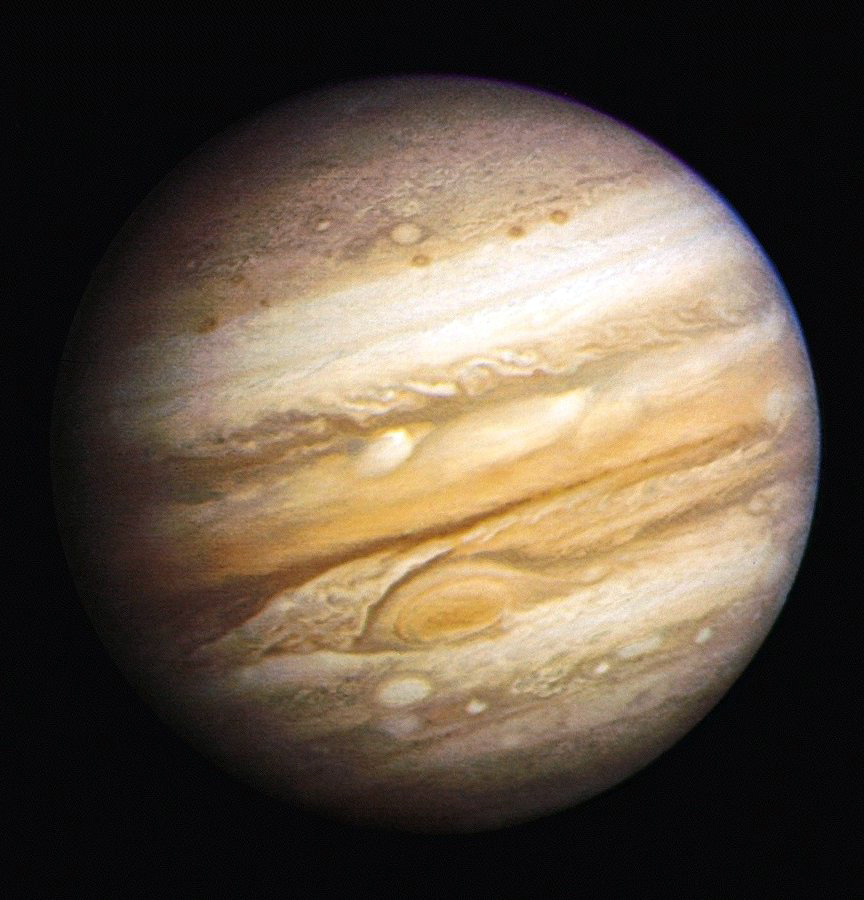
Lastly, I had never used a telescope before, and I thought that it was really cool to be able to see Jupiter in such detail.


Posted in Aliens, Class | Tagged , , | Comments Off on My Favorite Parts of the Semester

The Perks of Infinity

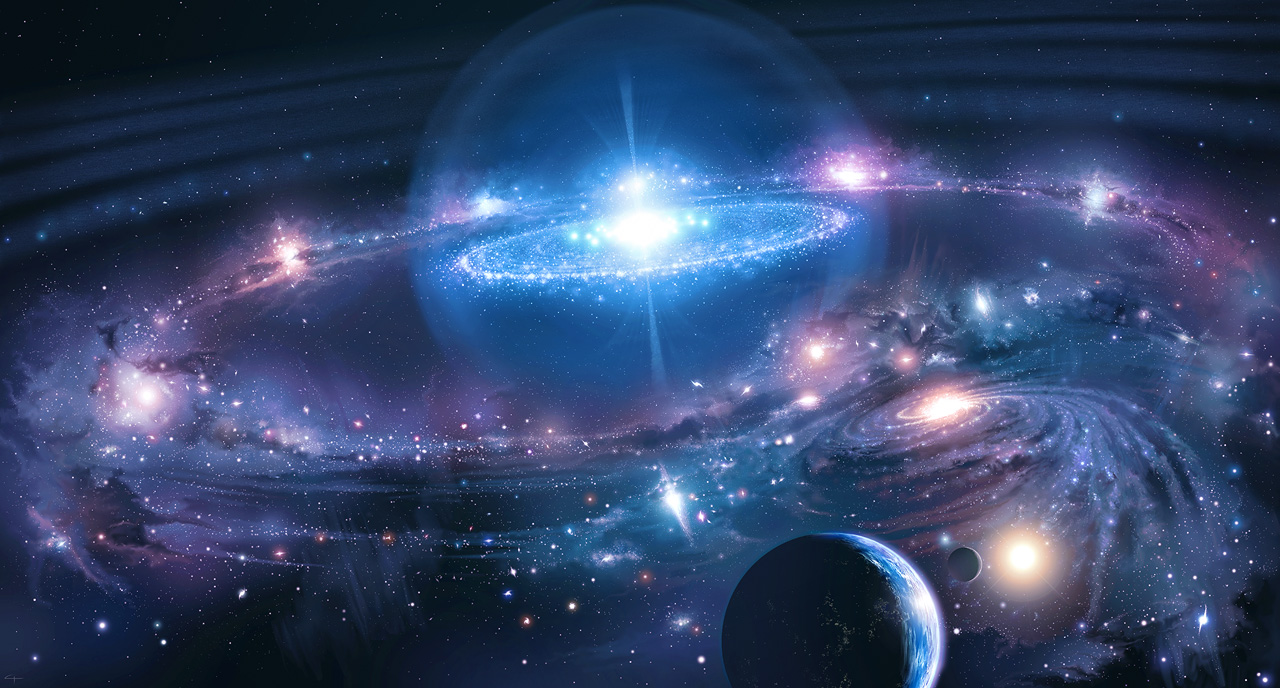
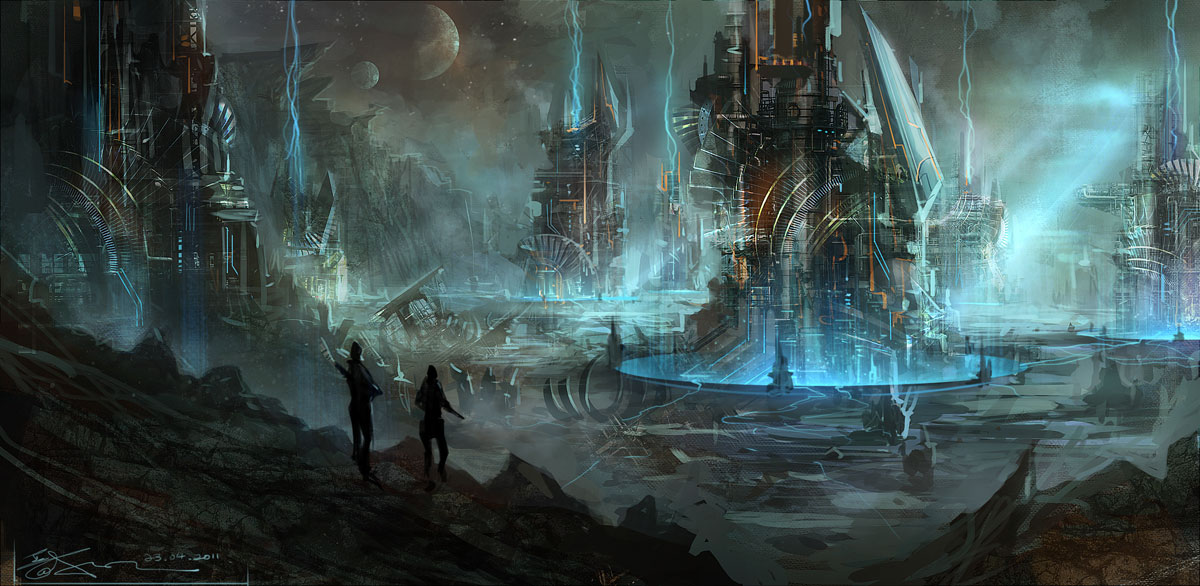
The good thing about the universe is that there a lot of things. It has got something for everybody. Take a look at these artworks:

f_world_1

f_world_2

f_world_3

f_world_4

f_world_5

f_world_7

f_world_6

What I ultimately learned from this course was that, somewhere out there, these places have to exist.

They better do.

Image and Image and Image and Image and Image and Image


Posted in Universe | Tagged , , , , , , , | Comments Off on The Perks of Infinity

Astronomy Past and Future

Image

After completing this course in Astronomy I think the two most lasting impressions I have are the sheer magnitude of the Universe, and a better understanding of the importance of Astronomy. So much has been discovered and there is so much more left to be discovered and understood. It is through this process of discovery that the study of astronomy has helped mankind improve their knowledge of the world around them. It has led to advances in physics, mathematics, philosophy, theology, technology, and much more. I am very excited to see what the future of space exploration brings in the years to come. NASA has been challenged to send a humans to an asteroid by 2025 and then to mars by 2030s. This is within our life time! Imagine the improvements needed to accomplish this. Here is a short video that talks about four significant space missions that will be completed soon. It’s something to look forward to in the years to come.


Posted in Historical | Tagged , , , | Comments Off on Astronomy Past and Future

Expansion of the Mind and Universe

The size of the Earth compared to the scale of the universe is very humbling. There is so much that we do not know, and there is still so much left to be discovered. However, the amount that we do know is astounding. We know about Earth, the other planets, the Sun, and the rest of the Solar System. The amazing thing is that we use what we know about our Solar System and apply it to the rest of the galaxy and the universe. Also, we can use what we observe from far away to discover more about what is close to us. Because of the properties of light, we can see back in time and see the history of the universe billions of years after it happened.

One of the coolest parts about exploring the universe is that humans serve as the example of the universe being self-aware. We are part of the universe exploring itself. As time progresses, we are gaining the tools necessary to better explore the universe. Even though we might only be a tiny speck in the universe and have only been around for a fleeting moment in the universe’s history, our existence is still significant. We are a product of the universe, and just as the universe is still expanding, our knowledge and curiosity for the cosmos continues to grow.


Posted in General, Universe | Tagged , , | Comments Off on Expansion of the Mind and Universe

Fermi Paradox

So let’s say there’s intelligent life in the galaxy outside of Earth. We don’t have the technology to visit them and our ability to search for them is limited. Centuries or millennia might pass before we develop the technology to find, communicate, and visit other civilizations in the galaxy.

But what about them? If extraterrestrials are part of a significantly older civilization and have had much longer to evolve and develop advanced technology, why have we not heard from them? According to estimates obtained from the Drake Equation, there should be many communicative civilizations in the Milky Way, and exponentially more in the universe. Of these civilizations, some should be relatively old and have much more advanced technology. Considering that these civilizations have this technology, why have we not heard from them already and why are they not everywhere in the galaxy? This is the basis of the Fermi Paradox.

There are several explanations for why other civilizations have not contacted us:

1. They don’t exist. There is the possibility that Earth is unique. The conditions that allow Earth to be hospitable for life could be very specific, and life could be a very rare occurrence. In addition, if both life and intelligent life are extremely difficult to develop, then it would make sense for us not to find any civilizations. This explanation is based on the assumption that life on Earth is the exception and that humans are very special.

2. Destruction: having the technology to communicate with other civilizations probably means having the technology to destroy civilizations. Self-destruction is a more likely end to a civilization, but destroying other civilizations as they were encountered would not be surprising. Self-destruction would not have to be complete annihilation; if there was a conflict within a civilization, the result could just be that the civilization is reduced to a primitive state and is not communicative. Essentially, there might be a narrow “window” where a civilization has the technology to communicate before it resets itself. Abiotic factors can also destroy civilizations, such as the catastrophic meteorite impact that wiped out the dinosaurs.

3. The third possibility is that other civilizations do exist, but finding them is harder than we think. Interstellar space travel is impossible at the present time, but we have ideas that may become reality in the future. However, even with improved technology, it probably will not be easy to travel across the galaxy. It might require too many resources. For example, we have the technology to send space probes into space, but we are not constantly doing it because it costs too much. An advanced civilization capable of space travel might only be able to afford a handful of spacecrafts. Progress and colonization of the galaxy would be slow. Also, if civilizations were separated by thousands of light-years, then communication between them would take thousands of years, and a civilization might go extinct before any messages can be exchanged.

Assuming that they have the ability to communicate, they probably have the ability to hide themselves as well. If they do not want to communicate, then they can be aware of our existence but we will not find them. Possible reasons might be self-preservation or the zoo hypothesis.

Which one of these is most likely? Who knows. Weighing the probabilities, I believe that it seems more likely for intelligent life to develop and either be destroyed or be extremely hard to find than for there to be no other civilizations in the galaxy. Destruction seems very likely given the short history of humans: the Cold War brought humans very close to nuclear warfare. If self-destruction of a civilization does not occur, then destroying other civilizations would be likely. The European conquests of the Americas during the 1500s are a good example of how civilizations of different technological capacities interact. If alien civilizations have a similar history, they might pursue an isolationist policy towards other civilizations.

All of these explanations are purely hypothetical. The quickest way to explain the Fermi paradox is to discover a communicative civilization and end the speculation.


Posted in Aliens | Tagged , , , , , , | Comments Off on Fermi Paradox

Semester in Review

Final Thoughts…

I have always been interested in space and the subject of astronomy. This is mainly because I was a huge Star Wars fan when I was younger and always hoped to see a ufo flying through the sky. However, after learning more on this subject I am truly amazed by all that our universe holds. There is so much information we as humans have begun to discover in the recent years. Yet, this wealth of information pales to all that we still don’t understand about the world around us. Theories will continue to be changed and altered as new discoveries shape our conception of the universe. And possibly one day, we’ll be the ones flying through space from world to world in a real life space adventure.


Posted in Class, Universe | Tagged , , , | Comments Off on Semester in Review

What excites me? Mars!!

Well, it’s been a great semester. I loved astronomy going into this class, and I love it even more going out. It definitely made me realize that planetary science is my favorite part of astronomy, and that’s why I’m pursuing the minor!

However, I wanted to make this post about what excites me regarding the future of astronomy and space travel. And that is definitely the first manned flight to Mars!!!! There are at least four private companies today with plans to send people to Mars within the next 20 years. My personal favorite is Mars One, who is currently taking applicants! I have yet to send in mine, but I plan on it! Their goal is to send the “houses” and life support systems over by 2022, and land the first four people to ever walk on the surface of Mars in 2023! Then, they will send four more people every two years for the next ten years. To choose the teams that will travel to Mars, the company is going to use an American Idol style voting system to “let the people decide.” Then, once the astronauts have landed, they are going to be on camera 24/7/365! They’re essentially going to turn it into a reality show, which will get people interested in space and help the company get the money that it needs to continue the project. Even if the chances of this actually occurring on time, if at all, are low, I still love the creativity involved and the boost that it will bring to astronomy worldwide!

If you’d like to find out more about Mars One, check out their website here

Amsterdam

The Mars One unveiling in Amsterdam (notice what the houses look like in the background)(Photo credit: PjotrP)

.


Posted in Historical | Tagged , , , , , , | Comments Off on What excites me? Mars!!

The Complex Chemistry of Titan

The formation of tholins in the atmosphere of ...

The formation of tholins in the atmosphere of Titan (Photo credit: Wikipedia)

A recent experiment by NASA’s Jet Propulsion Laboratory simulating Titan’s atmosphere has shown that there is some exciting chemistry going on not only in it’s upper atmosphere, but in the lower atmosphere too! Before this, scientists had assumed that as you got closer to the surface, the air became “dull and inert.” However, this team found that was most  certainly not the case. They found that light actually does penetrate deep enough into the atmosphere to spur “organic-ice photochemistry.” It is now thought that the organic molecules formed from these reactions might cover rocks on Titan’s surface. If that is so, they could interact with underground liquid water. When these organic compounds, called “tholins” interact with water, they from amino acids and nucleotides! This new knowledge is one more rung in the ladder to understanding all of the different types of worlds where life can form!

The original article can be found here.


Posted in Moons | Tagged , , , , | Comments Off on The Complex Chemistry of Titan