Milankovitch Cycles and Ice Ages

We have learned about how the tilt of the Earth’s axis affects the change of seasons.  However, over a 40,000 year cycle, the intensity of seasons and ice ages are affected by the Milankovitch Cycles.  This link provides a simple explanation of how these cycles work.  The obliquity, or how tilted the axis is, changes every 40,000 years, affecting seasons.  The more oblique, the more extreme the seasons.  Now, which direction the axis points changes every 26,000 years.  This actually changes which star is closest to the North Pole.  Currently, this star is Polaris or the North Star.  Combining this procession with obliquity changes when in the orbit Northern Hemisphere winter occurs.  Since there is more land mass in the Northern Hemisphere, this has a large effect on ice ages. When the Northern Hemisphere winter occurs at the farthest point from the sun, less sunlight will reach any given point on Earth.  This effect is compounded when the ubliquity is large, and then ice is able to grow over a large area of the Northern Hemisphere. How eccentric, or flat, the Earth’s orbit is changes on about a 100,000 year cycle, and can also increase or decrease the intensity of sunlight during Northern Hemisphere winters.   On a much shorter scale, 11 years, sunspots also affect global temperature.

The changes in obliquity, precession, eccentricity and sunspots affect global temperature


Posted in Class | Tagged , , , | Comments Off on Milankovitch Cycles and Ice Ages

Star Lore

Constellations

Constellations of the northern sky

Have you ever looked up into the night sky, gazed upon the stars, tried to imagine them within those famous constellations, and wondered, how the heck does that group of stars look like a man carrying a club and a shield/lion/pelt?  That would be Orion, (also, The Hunter) who I found several different representations of:

Orion 2 Orion and Lion Orion and Pelt

Orion w/shield                                                                      Orion w/lion                               Orion w/pelt

The Greeks even created a legend about Orion and another constellation, Scorpius.  Perhaps the best explanation is that the Ancients had very active imaginations.  In any case, every culture has their own representations of the images in the nighttime sky.  So, why do we have the constellations we have today, which mostly come from Greek and Roman mythology?  Well, in the Western world, the Greeks created comprehensive lists of constellations, with 48 already in the 2nd cent., however, these were all in the northern sky.  The southern sky constellations were added only after Europeans began the Age of Exploration and were often faced with an unfamiliar sky.  Some were even named after scientific inventions of the day, such as Fornax the Furnace, Antlia the Air Pump, Horologium the Pendulum Clock, and Microscopium the Microscope.  Of course, we don’t have these constellations today, and that is due to the original borders of these constellations being a bit fuzzy.  There were no fixed boundaries for them, as they were meant to be eye-visible stars, so the positions of constellations were getting difficult to discern.  Finally, in the 1920s, the International Astronomical Union, made up mostly of Europeans influenced by Greek and Roman tradition, set the current constellations in the night sky.  This is also why an astrology Zodiac doesn’t match the modern sky; the Sun travels through more than the 12 signs of the Zodiac in a given year.  Another cool thing to note is the names of some of the constellations that didn’t make the cut: Globus Aerostaticus the hot-air balloon, Robur Carolinum the Oak of Charles, and Le Renne the Reindeer (plus those ones above based on inventions).  Maybe it wasn’t just the Ancients with overactive imaginations after all.

Source:

http://www.stargazers.iinet.net.au/constellorigins.htm


Posted in Class | Tagged , , , , | Comments Off on Star Lore

How Technology Changed the Sky

Image

Technology shapes modern astronomy.

When thinking about the night sky, one thing that strikes me as particularly fascinating is that humans have been observing and analyzing this same sky for many thousands of years.  However, it has had such different meaning for each successive group to observe it.  Although we see the same movements and patterns today that were observed so long ago, advances in science and technology have given them new meanings to us that could never have been fathomed in the past.  People in the past were more restricted to their own observations, rather than having the help of technology to aid them.  This led to much misinterpretation of the world around us: things such as geocentric theories and celestial spheres.  People simply could not understand the enormous size of the universe, or anything even close to it.  It was thought that stars were not moving, but we now know that they are simply too far away for these movements to be perceptible.  Such misconceptions have been “proven” by sound theories throughout history, however they are continually disproven as we learn more and more.  I guess what really made a mark on me about this whole revelation is the magnitude of the impact that technology has truly had on our society.  Our knowledge of the universe had grown exponentially with this, allowing us to know more than we may have ever thought possible; yet, at the end of the day, we are still observing the same sky that has always been there.


Posted in Instruments, Science | Tagged , , , , | Comments Off on How Technology Changed the Sky

Light-Years: The Key to the Past

Image

Speed of light: 300,000 km/second

One topic I’ve found particularly interesting to read and think about is the speed of light and its implications.  We’ve learned that light travels at about 300,000 km/second; first off, this number alone is unfathomably large to me.  When I thought about how fast light travels, and then learned that it still takes this light many years to reach us from stars we observe, it gave me a much clearer idea of how large the universe truly is, and how far celestial objects outside of our solar system are from us, relatively speaking.

The other aspect of the speed of light that I find very intriguing is the fact that it allows us to see back in time; since it takes so long to travel, we see many stars as they were in the distant past.  Our observable universe is 14 billion years.   What we see at the very edge of our observable universe is seen to us as it was 14 billion years ago.  If any serious events have occurred in the stars we observe, we would not be able to know for a very long time; thus, while it is quite interesting to know that see can look into the past, it is also strange to think about our inability to see things in the present.  Finally, I was left contemplating how much larger the universe might truly be since our observable universe is not the entire universe; unfortunately, this is a question we will never have the answer to.


Posted in Light, Observables, Universe | Tagged , , | Comments Off on Light-Years: The Key to the Past

Lunar Eclipses

The lunar eclipse happens when the Earth lies directly between the Sun and the Moon. The Earth thus cast a shadow on the Moon, and we will not see the light reflected by the Moon therefore.

The shadow of the Earth consists of two parts: a central umbra, and a surrounding penumbra. Umbra blocks sunlight completely, while penumbra blocks sunlight only partially. Thus umbral shadow darkens more than penumbral shadow.

As a result, there are three types of lunar eclipses.

1. Total Lunar Eclipse
Total lunar eclipse happens when the Sun, Earth, and Moon are perfectly aligned. The Moon comes into the umbra shadow of the Earth. This is the most visible lunar eclipse. The Moon becomes dark and red during totality. It appears red because the Earth’s atmosphere bends the red bend of the sunlight toward the Moon.

2. Partial Lunar Eclipse
Partial lunar eclipse happens when the part of the full Moon comes into the umbral area.

3. Penumbral Lunar Eclipse
Penumbral lunar eclipse happens when the Moon passes through penumbral shadow only.


Posted in Class | Tagged , , | Comments Off on Lunar Eclipses

The Million Star Falsehood

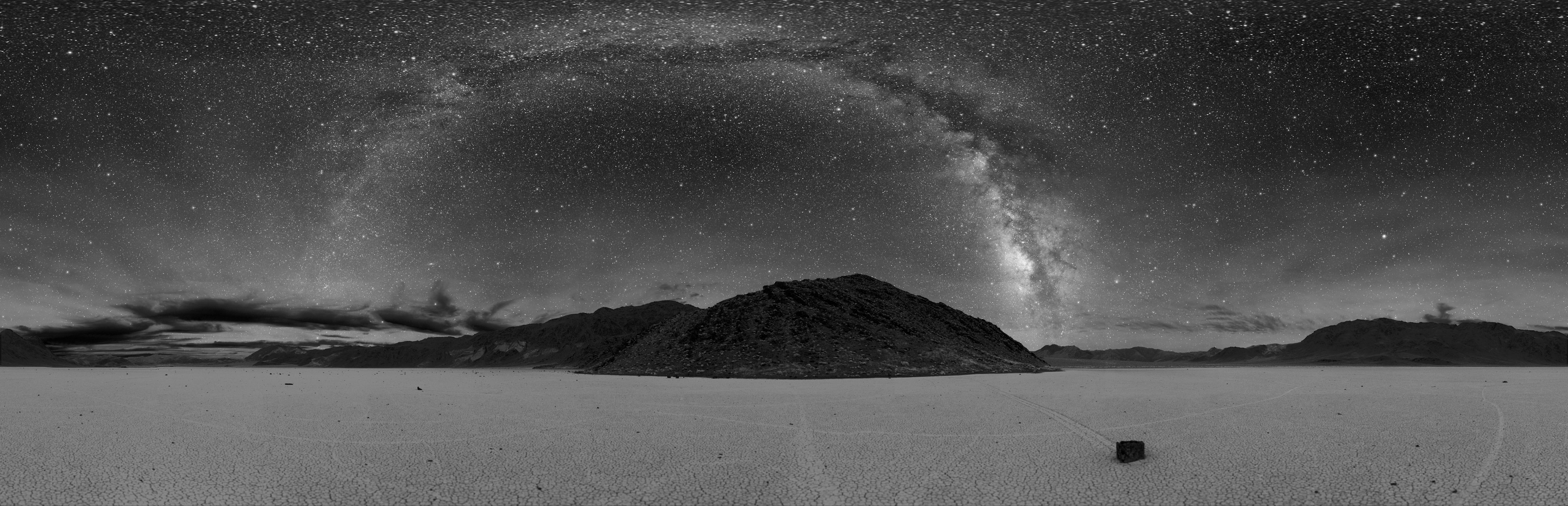
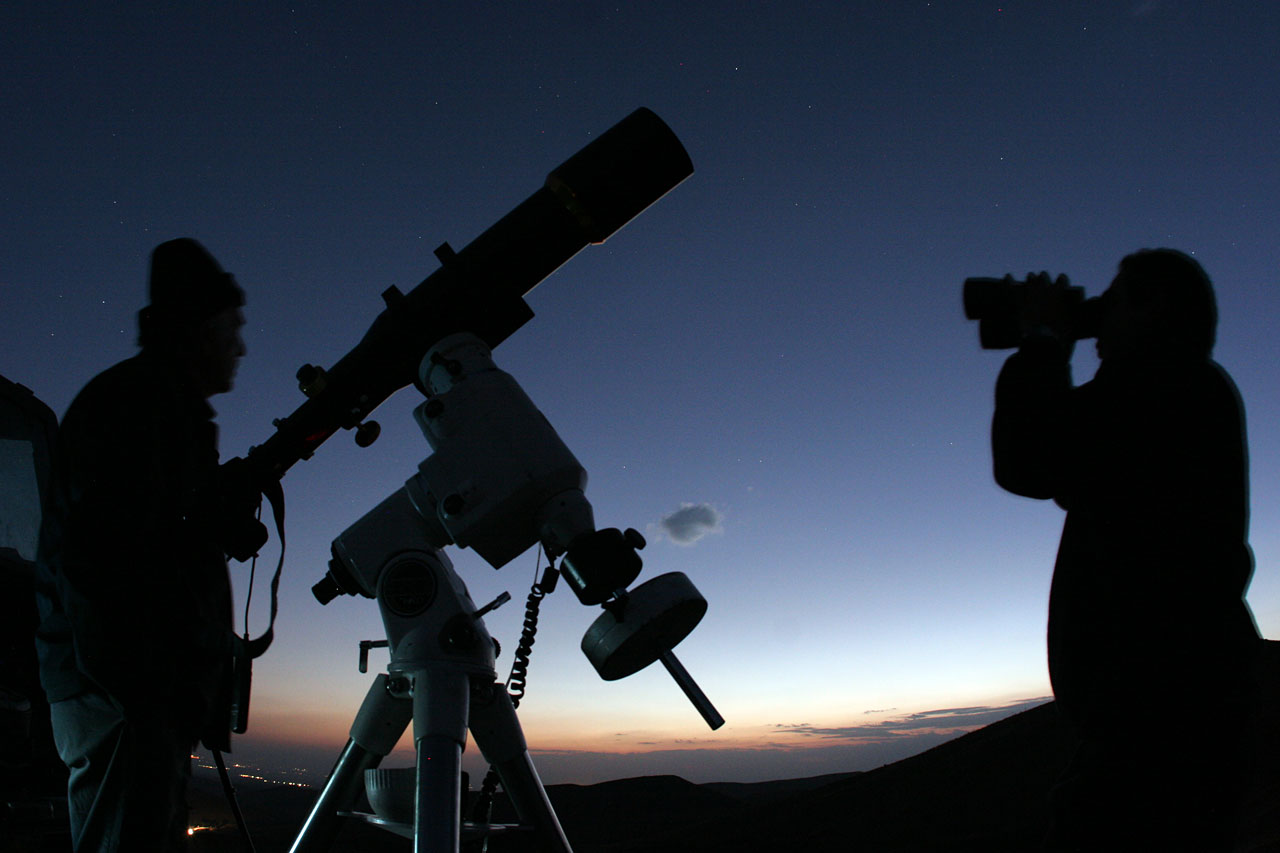
I was only a little bit surprised when I learned recently that there were not a million stars visible in our night sky.  One million is a huge number, and as small as stars are, I never believed there was nearly enough space in our sky for one million of them to be visible.  However, my surprise came when I learned that only about 2000-2500 stars are visible at one time to a human being with good eyesight.  The image above certainly seems to contradict this at first glance, but I haven’t taken the time to make sure it checks out.  Because of images like the one attached I was certain that (while nowhere near a million) there were more stars in our night sky than the relative handful of 2000.  So, if you had a way to check off each star you counted and not get mixed up, counting the stars in the sky at night would completely possible (albeit time consuming) feat.

Posted in Class, Observables, Stars | Tagged , , | Comments Off on The Million Star Falsehood

The Size of the Universe

How to conceptualize the size of the universe?  I think we find it so hard to do it because astronomical numbers dwarf anything we use in day to day life and on some level, our brains can’t process them.  It’s like trying to visualize the national debt.  What’s a couple more zeros here and there on the scale, really?  I was looking around the internet for good ways to help my visualizations, and I stumbled upon a website that posted five different websites showing different ways of conceptualizing the scale of the universe:

http://www.brainpickings.org/index.php/2010/10/11/the-scale-of-the-universe/

The one that had the slickest presentation (and therefore the one I liked most) is the Nikon Universcale (#3) (even though I’m really a Canon kind of guy).  This website gives a visual representation (to scale) of various objects in our universe, beginning with tiny things like protons and neutrons and growing to galaxies.  The sizes of the objects at the end are truly vast, but they don’t seem so big until one compares them to the things at the other end of the scale, which are completely dwarfed.  It’s really cool to see that, from a universal perspective, we are the size of atoms.

Universcale

Universcale

Another model that fascinated me is the one from Primax Studio (#2).  It’s similar to the Universcale, but Scrolling to the end of the scale, one sees a comparison of the estimated size of the universe and the size of the observable universe.  Even though the observable universe is vast, it’s still only a small percentage of the whole universe.

Size of the Universe

Scale of the universe(s)

In the end, it’s still hard to wrap my mind around these gigantic scales, but I have found that these visual representations make it a bit easier.


Posted in Class, Universe | Tagged , , , | Comments Off on The Size of the Universe

Party Planning– for a solar eclipse!

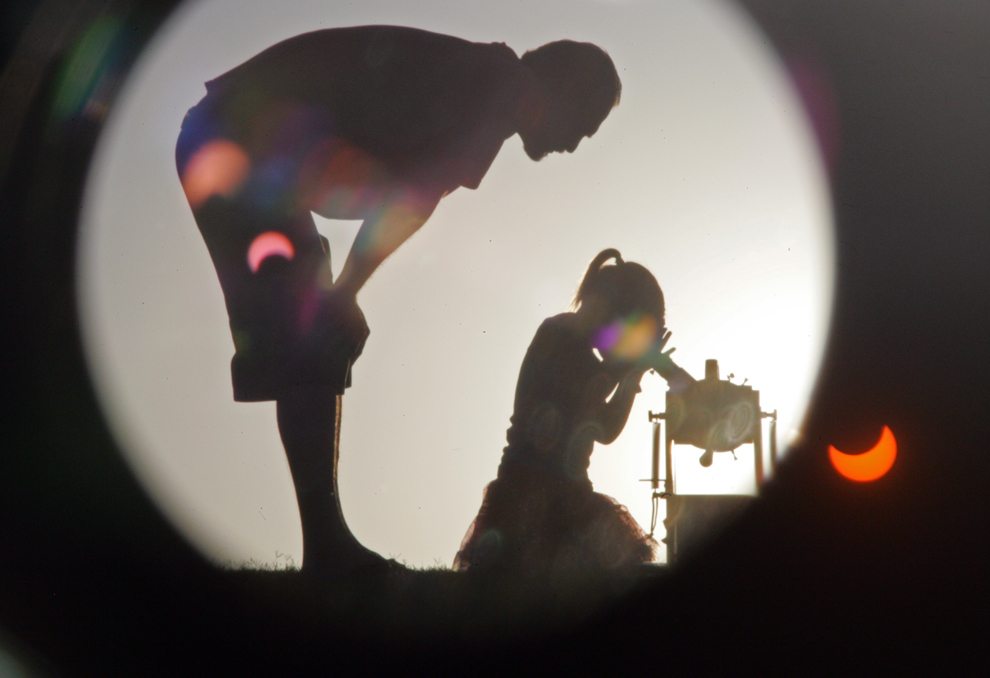
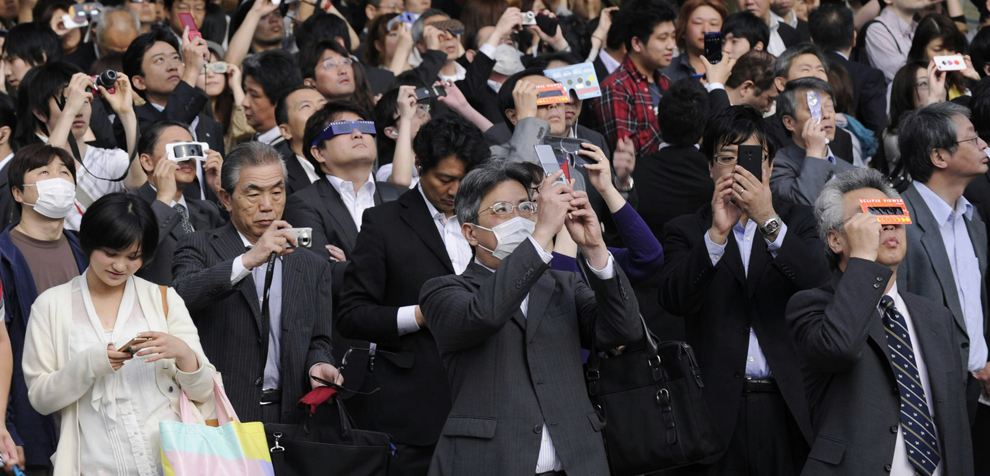
On May 20, 2012 an Annular eclipse was visible in the continental US. This eclipse marked the first annular eclipse visible for the US in EIGHTEEN years! That’s almost my entire life span! For additional information on this eclipse, click here. The eclipse was visible in several locations in California, Utah and New Mexico. Being an East coast girl, I didn’t have much chance of seeing this momentous event. However, May 20th, was particularly important to me because I was in the middle of a 12 day cross-country road trip from Boston to San Francisco, following a U-shaped path down the East Coast, through several southern states, and back up the California coast line. Alamogordo, NM was one of my last stops on the road trip, where I spent a night and a day admiring the amazing White Sands National Monument. (For pictures of this amazing place, click here.) Unfortunately, due to the timing of my road trip (planned before I learned of the eclipse), I passed through New Mexico on May 13th, exactly one week BEFORE the eclipse. Disappointed and curious as to what I had missed, I came across several awesome plans for eclipse viewing parties. Before taking this class, I didn’t know much about eclipses, so all the excitement, planning, and events that surrounded this astrological event seemed very bizarre to me. Now, having a greater understanding of WHAT an eclipse is and WHY they occur I can appreciate the various ‘viewing parties’. Overall, I love how the annular eclipse not only provided a rare glimpse into the wonders of the solar system, but also gave people from all over an opportunity to come together. New Mexico, (along with California and Utah) was host to citizens from all over the US wanting to watch this event. On a much larger scale, because the eclipse was visible from several locations from across the ENTIRE planet, this event fostered a sense of GLOBAL community. Pretty neat!

Images from Chinas Fujian Provence; Kyoto, Japan; Tokyo, Japan; Grand Canyon National Park; Palm Springs, CA; Yokohama, Japan; Odessa, TX; Phoenix, AZ

For the source of these images, see Boston.com’s article: Ring of Fire Eclipse: 2012. 

Screen Shot 2013-01-28 at 11.33.25 AM bp3 bp4 bp5 bp7 bp18 bp28bp37


Posted in Class, Observables, Sun, Universe | Tagged , , , , , , | Comments Off on Party Planning– for a solar eclipse!

Things to know about Zodiacs

According to our birthday, we know our Sun Sign or zodiac. What does it actually mean? I personally love sun sign astrology, but didn’t know its true meaning before I begin this class. The star sign is the constellation in or near which the Sun appears at the night of a given day.

If we can see stars and constellations during the daytime, we will actually discover that the relative position of stars and constellations to the Sun is about the same during one day. Over the course of a year, however, the Sun moves eastward along the ecliptic because the Earth orbits the Sun. The constellations that locate on the ecliptic are zodiacs. Also, even within one day, the sky view changes in different latitudes.

In astrology, we think there are twelve zodiacs.

Not sure about your astrological zodiac? See here.

However, in astronomy, we actually have thirteen zodiacs! And the dates for zodiacs are also different from astrological zodiacs! What an astonishing fact! What does it actually mean?

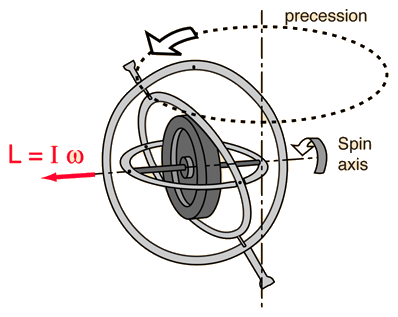
To understand this, we first need to realize that the axis of the Earth is actually tilted about 23 degrees. Although the direction of the tilt stays the same over several years, the Earth actually precesses! Just like a gyroscope! A cycle of precession takes about 26000 years. The tilt will point at the opposite direction after 26000 years.

A precessing gyroscope

The astrological zodiac was assigned thousands of years ago. At that time, the astrological zodiacs are the same as the astronomical zodiacs. However, due to the precession, the axis of the Earth has already moved about 1/13 of a complete cycle over the past thousands of years. The astronomical zodiac is about a month off the astrological zodiac, and we now have thirteen zodiacs in astronomy, which is Ophiuchus!

The new dates are as following:
Capricorn: Jan. 20 – Feb. 16
Aquarius: Feb. 16 – March 11
Pisces: March 11- April 18
Aries: April 18 – May 13
Taurus: May 13 – June 21
Gemini: June 21 – July 20
Cancer: July 20 – Aug. 10
Leo: Aug. 10 – Sept. 16
Virgo: Sept. 16 – Oct. 30
Libra: Oct. 30 – Nov. 23
Scorpio: Nov. 23 – Nov. 29
Ophiuchus: Nov. 29 – Dec. 17
Sagittarius: Dec. 17 – Jan. 20
From http://wisdomquarterly.blogspot.com/2011/01/astrology-13th-sign-revealed-video-news.html


Posted in Class | Tagged , , , | Comments Off on Things to know about Zodiacs

SkyView?

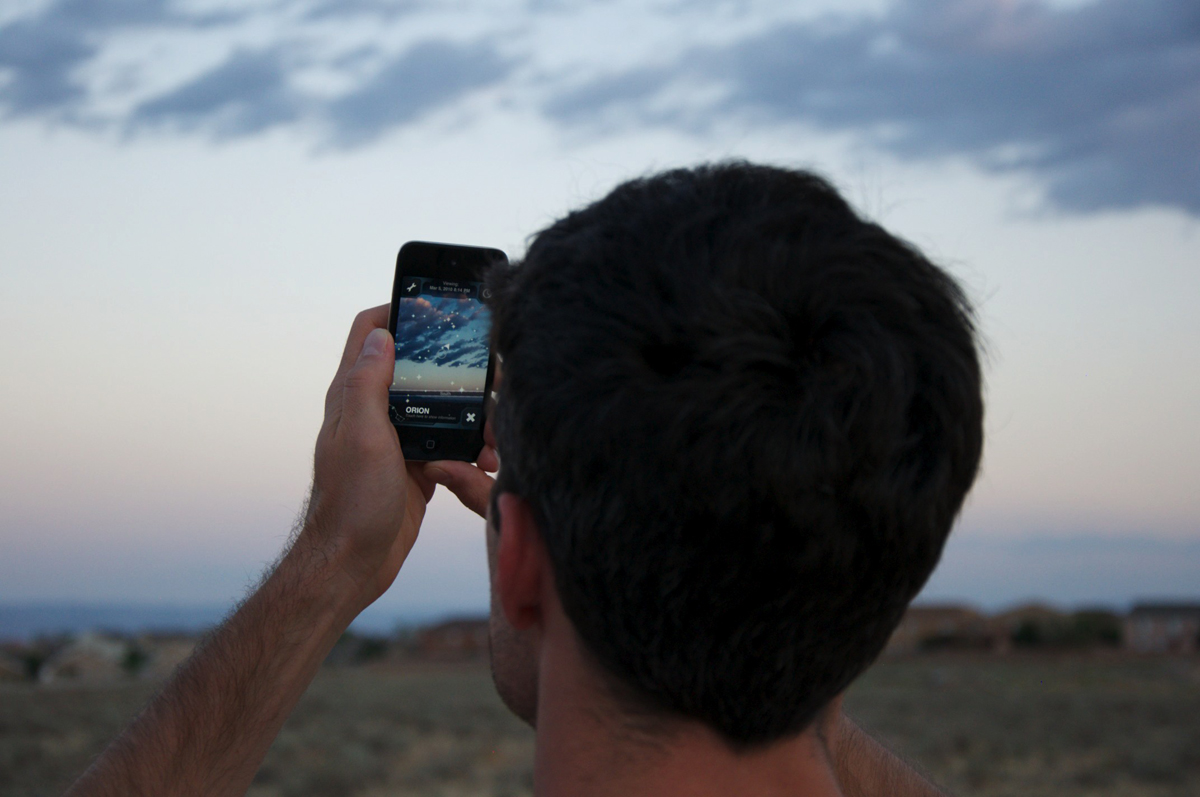
SkyView gives you the entire sky at your palm… and for only $1.99! By pointing your Iphone camera anywhere in the sky, SkyView will show you constellations, stars, planets, and satellites that you can tap and zoom in on to learn more. It provides you with a search interface that will tell you exactly where Taurus will be tonight (pretty incredible). You can also enter in a specific time and date to see exactly what will be in the sky at that time, which I find incredible. It is literally like Stellarium at your fingertips in HD!

What I find the most interesting is just how long it took to load this interface. How do weather and clouds not get in the way of what you can view? Does it use your exact latitude to determine where you are and then at light-speed send information to a system to look up what will be present in that area? It’s incredible. Most all of the reviews say that there is little to no lag in the app when viewing the sky from the screen.

I’m not sure what anyone else’s take on it all is, but I think it is ingenious that our technologies have taken us to a point such as this, where we can look at the Moon, planets, stars, constellations, simply by curiously tapping a button on our sky zoomed Iphone!

source: http://download.cnet.com/SkyView-Explore-the-Universe/3000-20415_4-75341719.html


Posted in Class | Tagged , , , | Comments Off on SkyView?