

3 March 2013, Drew Hamilton


3 March 2013, Drew Hamilton
If you’re in my 2014 Solar System class, please put a comment here showing that you’ve found my blog and that you’re following it :) Please include your first name and last name initial. Note that you MUST be logged in to your own WordPress blog when commenting!
Also make sure you have bookmarked the big class blog aggregator: Astro201 – The Solar System. From there, you can follow everyone or specific classmates if you like.


Here is an interesting ted talk on fusion propulsion. Fusion propulsion would be just about the only way humans would be able to achieve interstellar space travel. Unfortunately, this possibility is still a long way off, as the speaker Jason Cassibry points out, but the concept is still there. Scientists have long been working on producing controlled fusion reactions, and fusion propulsion would be another use for this energy source. Basically, the problem is not with causing a fusion reaction (humans have already done this). The problem is creating it in a controlled way so that the fusion reaction does not blow up the spaceship. Hopefully, scientists and engineers will make breakthroughs soon, because I’d love to visit Alpha Centauri sometime!


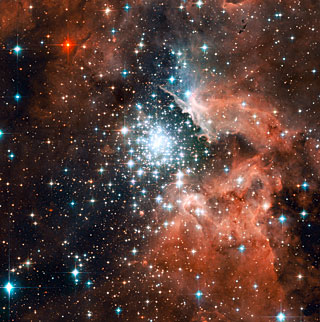
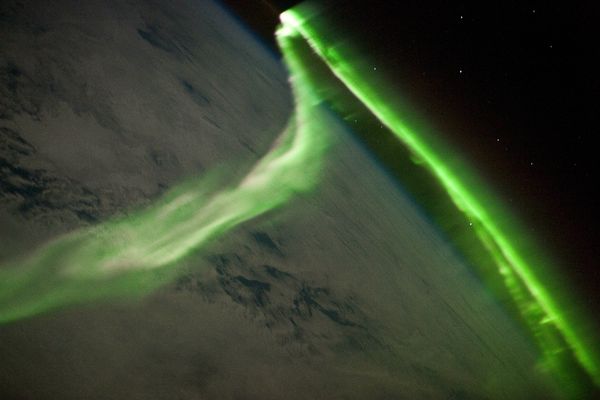
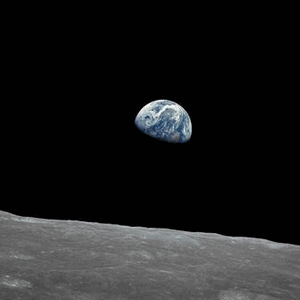
What a wild ride it has been for me in astronomy 201. I really didn’t know what I was getting myself into. I am not strong in science, I took this course because I needed a credit for MNS and i sounded really interesting, and I didn’t know anyone in the class when it began. I remember sitting in the first class period reading the syllabus noting it would be a challenge, but rewarding. At the end of the semester I can honestly say this is so true. I’ve learned so much throughout this course and can honestly say I have a solid foundation of an introduction to astronomy, worked hard, and made a couple friends during the semester. This course was dynamic, cumulative and multifaceted. I learned that our solar system is an incredibly unique place, and the series of events that combined to form the system as a whole, planet Earth, and life on Earth took time and effort. It makes me appreciate not only living on such a vibrant and energetic planet, but also to live during a time when so many new discoveries are taking place. Looking to the future, astronomers are looking for the existence of life on other planets. With new technologies being developed every day to increase the chances of finding new life, new extrasolar planets being discovered, new missions being launched, and new generations of astronomers bred in classes just like 201, there is so, so much to look forward to. Most importantly, this class gave me perspective. Perspective on small things, like how studying for a test may seem like the most stressful thing in the world but really you just have to do the best you can, and bigger things, like how small the humans existence is on our geologic time scale, and how small Earth is in the scale of the universe. I have attached some of my favorite pictures from things I’ve learned from the semester to conclude my final post! From a space images website, national geographic and the space telescope archives.








Extreomophiles are mircobes that can survive in ‘extreme’ environments. Our knowledge of these life forms forces us to reconsider the possibility of life on other planets because environments that seem inhospitable to us humans are actually hospitable for these extremophiles. There are several known types of extremophiles: thermophilies that can withstand extremely high temperatures, psychrophiles that can live in very cold environments, acidophiles that are able to survive in acidic conditions, alkalophiles that can live in very alkaline environments, barophiles that can withstand incredibly high pressure, xerophiles who prefer dry environments, halophiles that thrive in high-salt concentrations, and anaerobes that don’t need oxygen to survive. These life forms live in the wildest locations, from inside rocks to inside Yellowstone geisers. In summary, learning about extremophiles allows us to define the requirements for life into three basic requirements: 1) a source of nutrients 2) energy and 3) liquid water.
In reading about extremophiles, I came across this cool YouTube video. As always, I prefer visual ways to learn about these topics. I think the narrator makes the subject lively and intriguing, and I like his use of visuals while he speaks. In this video, the narrator talks about Tardigrades.

My favorite fact from the video says that these little critters can withstand up to 1,000x the amount of radiation that can kill an elephant. Think about that! This tiny little THING is stronger than an giant elephant! He concludes the video talking about how the existence of tardigrades helps prove the existence of possible life on other planets, a topic we’ve discussed often in class.
I hope you enjoy the video !



The Drake Equation, as we’ve discussed in class in the most recent unit, is a formula intended to project an estimate of how many intelligent societies could exist in the universe. The formula multiplies a series of interdependent variables–the rate of formation of Sun-like stars, the number of planets in a habitable zone per solar system, etc.–to get a probabilistic grasp on whether there’s life out there, and if so, whether it is organized in communicable civilizations.
Seems like the underlying idea is pretty adaptable to whatever your situation, though. While doing some background reading, I found a brief essay by Peter Backus, a British Ph.D. student of economics, that took the Drake equation in a totally new direction. Mr. Backus’s question: how likely am I to get a girlfriend?
Backus presents the original Drake equation before toggling the variables to fit his needs. Once he establishes his base values–the population growth rate and the percentage of that population that is female–he adjusts the subsequent variables for age, attractiveness, education level, and more. He also takes into account his own age, perhaps analogous to the section of the Drake equation that measures the longevity of a communicable society…? Either way, it boosted his chances.
When it’s all said and done, Backus predicts that there are a little over 10,000 ladies in the UK who fit his criteria for girlfriend potential. That’s on par with a few of the Drake equation estimates that we did in class, though just like the real equation, I feel like there’s a huge margin of error. What if all those girls–just like all those other communicable civilizations out there–don’t know that he exists?


It is interesting to think about the existence of extrasolar planets. Now that we are starting to find a lot of giants, the new thing is finding Earth like planets.

Artists renditions of the three recently discovered Earth-like planets along side Earth
Recently, Kepler has found three Earth-like planets. I am anxious to hear what we can find out about these planets. At this moment, finding these planets is a big leap. However, hopefully in the near future, we can begin to analyze the spectra and determine the compositions of the atmospheres. The hope of finding planets that are even more Earth-like just increases with each discovery.

This picture compares the inner planets of our solar system to Kepler-62, a newly discovered planetary system
NASA’s Kepler mission has recently discovered three super-Earth-size planets in the “habitable zone,” or the range of distances form a star where the surface temperature of an orbiting planet might sustain liquid water. It is planets like these where we might one day discover alternate forms of intelligent life. Only recently have we begin to overcome the technological limits that kept us from discovering planets this small and distant; now, we are entering a new age of astronomy which seems enormously more promising in terms of significant discoveries, which could include discovering life elsewhere.
Reading about these newly discovered planets brought me back to what has been a recurring theme in my blog posts: the truly astonishing pace of discoveries that is currently taking place in all areas of astronomy research. In this course, it quickly became apparent that astronomy is marked by innumerable uncertainties, particularly outside of our solar system. However, our several-year-old textbook predicted that the coming years would bring a new, groundbreaking age of research for astronomers. From the information I’ve stumbled upon throughout the semester, particularly from writing my blog posts and reading others’ posts, I can certainly say that this prediction seems to have come true. It’s unbelievable how many significant, unprecedented discoveries have been made only during the short course of this semester. I can’t fathom what we will know in 5 years, let alone 10, 20. Whatever the future may bring, I can’t wait to see how much we learn in the coming years, and I think it’d be amazing to see how this course may be different say, 20 years from now.


NASA’s Cassini spacecraft recently observed meteors colliding with Saturn’s thin rings. This marked the first direct evidence of small meteoroids breaking into streams of rubble and crashing into Saturn’s rings, although astronomers already expected this to be occurring regularly. However, specific details of such impacts were merely speculation, much of which is cleared up via observations from Cassini. These observations imply that currently, these small particles impact Saturn about as frequently as they do Earth; it’s quite surprising to learn that two very different locations of our solar system are impacted at the same rate.
In light of our recent discussions of the Drake equation, this stood out to me. It seems very significant that small meteors are impacting Earth and Saturn at similar rates; this leads me to believe that the prebiotic materials that struck Earth and ultimately resulting in the formation of intelligent life could strike other planets in our galaxy just as easily, altering ne, or the number of planets that can potentially support life per star that has planets. Although life is still contingent upon planetary conditions, this still leaves me with a more positive outlook that I would have had regarding the possibility of intelligent life on other planets.


One of the most mysterious questions of human beings is that: how did life come to existence? Where did first trace of life come from?
One hypothesis is that conditions and elements on early Earth gave rise to the first single-cell organism. To testify this hypothesis, chemists Stanley Miller and Harold Urey animated the conditions of young Earth in the 1950s. They mix chemicals such as hydrogen and water in a closed glass tube, and give electric spark to the tube. Some prebiotic molecules, such as amino acids, were produced spontaneously within a week. This is the widely known Miller-Urey experiment.

Some further suggest that a solution of organic molecules with clay can produced strands of RNA, which further developed to DNA after years of millions of years of reaction and replication.

