The Earth, the Moon, and the Space In Between

Since space seems so far away to most of us humans, we can forget how truly massive the emptiness of space is. Space really is appropriately named, because so much of it is just that – empty space, nothing there. For example, let’s look at the distance between the Earth and the Moon. While the Moon is usually pictured relatively close to Earth, it’s actually much further away. In fact, all of the planets in our solar system could fit in between the Earth and the Moon, with a little room to spare. Note that this is considering the average distance between the Earth and the Moon – sometimes there is more space, sometimes less. Here’s an infographic from a Reddit user.
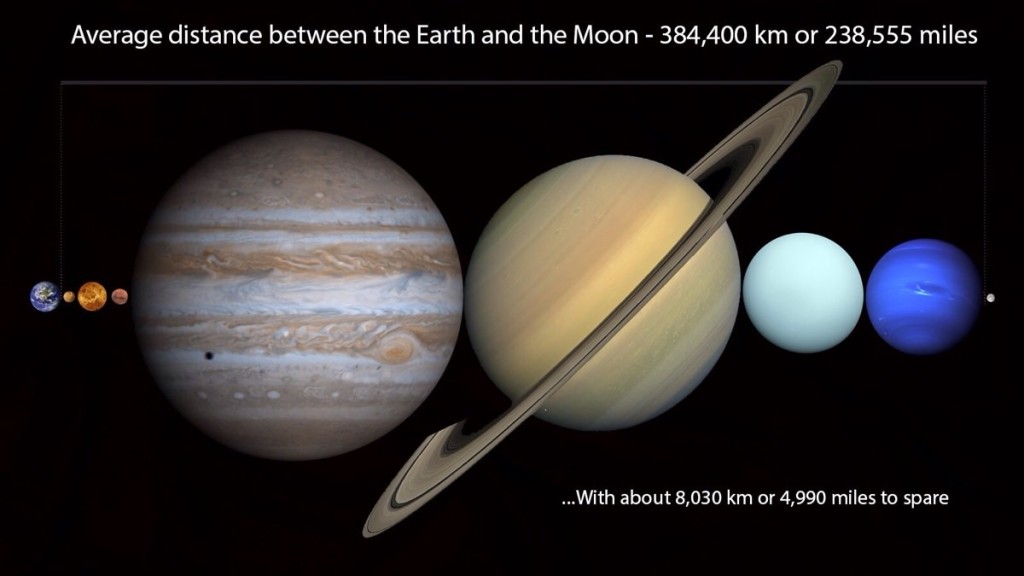
From Reddit

A Universe Today article checks this infographic’s accuracy by using the numbers NASA has on their website, and it checks out. Although the infographic shows a bit more space than there actually is, there’s still nearly 4400 km left to spare – which is enough to fit Pluto! So the *eight* other planets can fit between us and the footprints of the Apollo 11 crew, which is pretty wild. If there’s that much space between us and the Moon, our closest neighbor, imagine how vast the distance is between us and literally anything else in space.

Posted in Class, General, Observables | Tagged , , , | Comments Off on The Earth, the Moon, and the Space In Between

An App to See the Stars

Have you ever looked up at the sky and wondered what constellation you were looking at? There are many tools out there to help you figure it out! One of them is SkyView Lite, an app offered on the Apple Store that identifies constellations for you and is free to download. Simply open the app and aim your phone camera at the sky, and it will show the outline of the constellation the camera is pointed at. You can even do it during the day when stars aren’t visible to the human eye or use the search feature to see another part of the sky. No wifi is required to use it, so SkyView Lite gives access to the constellations wherever you are. Has anyone used SkyView Lite or any other constellation observing app? SkyView’s Website

Posted in Class, Stars | Tagged , , | Comments Off on An App to See the Stars

Christopher Columbus and The Blood Moon

Columbus gazing upon the “Blood Moon” as the Jamaicans rush to give him and his crew food out of fear.

Credit: Google Images

“In 1492 Columbus sailed the ocean blue.” We all have heard of this popular rhyme in order to help us remember the voyage in which Christopher Columbus took on his journey to the New Americas. However, some fail to realize in history that Columbus very well may have never returned from this voyage had it not been for one of the most magical phenomenas that can occur in astronomy: The Blood Moon. A “blood moon” occurs when a total lunar eclipse takes place, causing the white appearance of the moon to turn into a bloody red color due to the Moon residing in Earth’s shadow and the light from Earth’s sunrises and sunsets falling upon the surface of the moon (Space). But how did all of this save Columbus? Well, in 1504 Columbus, in his exploration of the new world, Columbus was stranded on the island of Jamaica. At first the two cultures coincided peacefully but after Columbus “murdered and robbed” a few of the local Jamaicans, the Jamaican people were understandably not too eager to give Columbus and his crew the food they needed to survive. On the brink of starvation, Columbus utilized his knowledge from the almanac that foreshadowed a blood moon in the near future to threaten the Jamaican people that if he and his crew did not receive food that God would become angry and turn the Moon red. Needless to say, when this phenomenon did come true the Jamaicans quickly rushed to feed the crew members and ultimately lead to astronomy saving Christopher Columbus’ life! Did you know about this story? Comment down below any reactions you have!

Posted in Class | Tagged , | Comments Off on Christopher Columbus and The Blood Moon

Speed of Light Discussion

Physics behind Solar Sails, by Robert Miller

I actually find the speed of light and the implications behind this physical constraint pretty interesting. Particularly, if light takes time to travel, everything we see is technically in the past. As covered in the lecture, the sunlight that we see is 8 minutes old. But if we use this concept for everything we see, for example a mug on a table, the mug belongs fractionally in the past. If light takes time to travel the distance between your eyes and the mug, then the mug you see must marginally be from the past. (this is not to mention the small amount of time it takes for your brain to process the stimulus). Even though this time difference is a technicality and makes no measurable difference to our lives, I think it is a pretty cool concept to think about and makes me think a little different about reality. 

I also wanted to talk about the possibility of reaching close to the speed of light. It seems like the best method we have so far is with solar sails. These sails make the Voyager look relatively slow, as they can reach 10% of the speed of light at nearly 18,600 miles a second. While solar sails still can’t compare to the speed of light, 1/10th the speed is impressive in itself and takes galactic travel out of science fiction. If Alpha Centauri is ‘only’ 4.4 light years away, we could reach it in 44 years with solar sails, which makes it doable. 1/10th the speed of light is even more impressive considering the short time humans and science have been around. I imagine our technological advances in another 1000 years could get speeds even closer to the speed of light. 

 I wanted to end the blog with a hypothetical I have been thinking about. If we were somehow able to accelerate a spaceship to marginally slower than the speed of light (off by 1 nanometer/hour), could you run or throw a ball in the same direction the spaceship is traveling? I’m guessing you wouldn’t be able to because it would violate the laws of physics by exceeding “c”, but I think it’s intriguing how you can throw a ball backwards, but not forwards. 

Posted in Light, Space Travel | Tagged , , | Comments Off on Speed of Light Discussion

The Zodiac & Precession

Photo from Wikipedia

Do you know your sun sign? Well, even if you do, it’s probably wrong! Let me provide some background. The zodiac is a term for the 12 constellations found along the Sun’s ecliptic (a circle that represents the Sun’s apparent path through the constellations throughout the year), while your sun sign indicates what constellation the Sun was in when you were born. Sounds easy enough to determine your sun sign (and entire natal chart, if you’re that interested), right? Not exactly. During the 5th century BC, Babylonian astronomers established the 12 zodiac signs along the ecliptic, with each sign containing 30 degrees of celestial longitude. [1] However, what these astronomers did not know (and really had no reason to believe at the time- Ockham’s razor!) is that the Earth experiences a phenomenon called precession, which is the “gradual wobble of the axis of a rotating object around a vertical line,” according to our textbook (The Cosmic Perspective). This precession occurs because of the fact that Earth’s equator bulges due to centrifugal force, thus attracting the Sun and the Moon and creating the wobble. [2] Earth’s precession cycle is around 25,800 years, which means that since that time, the zodiac has shifted one sign to the west (around 36 degrees). [3] This means that although I have always considered myself a Libra, it looks like I’m actually a Virgo! Do you all think this completely discredits astrology, or do you think there’s any truth to it? Feel free to discuss (and maybe even comment your sign for fun)!

Posted in Class, Historical, Stars | Tagged , , , | Comments Off on The Zodiac & Precession

El Castillo

El castillo, a pyramid at Chichén Itzá in Mexico, is a Mayan temple dedicated to the plumed serpent God Kukulcán. The structure’s design is deeply related to astronomy and the calendar. Firstly, there are 91 steps on each of the four sides and a top platform, making 365 steps, one for each day of the year. This choice indicates that the Mayans understood the length of the Earth’s orbit around the sun. The most special part of the pyramid, though, is what happens on the two equinoxes. At sunset, a shadow is created on the structure that makes it look like the serpent god is descending down the side of the pyramid (as seen above). This design required a deep knowledge and understanding of astronomy that is impressive to this day.

Posted in Class | Tagged , , , , | Comments Off on El Castillo

The Speed of Light

Light moves pretty fast. Like, really fast, at least from our perspective. At a speed of a whopping 299,792,458 meters per second (interesting to note that this is the exact value of the speed of light, not an estimation or approximation!) or about 670,616,629 mph, light travels faster than we can probably ever expect to go in our lifetimes. However, it’s easy to forget that the universe is just as big as the speed of light is fast. Consider the following animation:

Animation created by James O’Donoghue, a planetary scientist at NASA’s Goddard Space Flight Center. This animation can be found here at the Science Alert website.

The article from which I found this animation sums it up nicely when it described the speed of light as “torturously slow”. What seems pretty much instantaneous in our daily lives now seems to crawl across space bit by bit from Earth to Mars. To make matters even worse, Earth and Mars aren’t even that far away from one another on the cosmological scale. As a matter of fact, we’re practically right on top of one another when considering distances as vast as light-years and parsecs.

All of this is just to remind you to keep distances in mind as we learn our way through the solar system this semester. It’s all too easy to forget that space is big (like, bigger than we can even comprehend or conceive of big), so, in comparison, we’re absolutely, unequivocally tiny. What a miracle it is that something so small as humanity has been able to learn so much about the universe we inhabit!

Posted in Class | Tagged , | Comments Off on The Speed of Light

An Introduction

Hi, I’m Allie! Welcome to my blog for ASTR 2110: The Solar System.

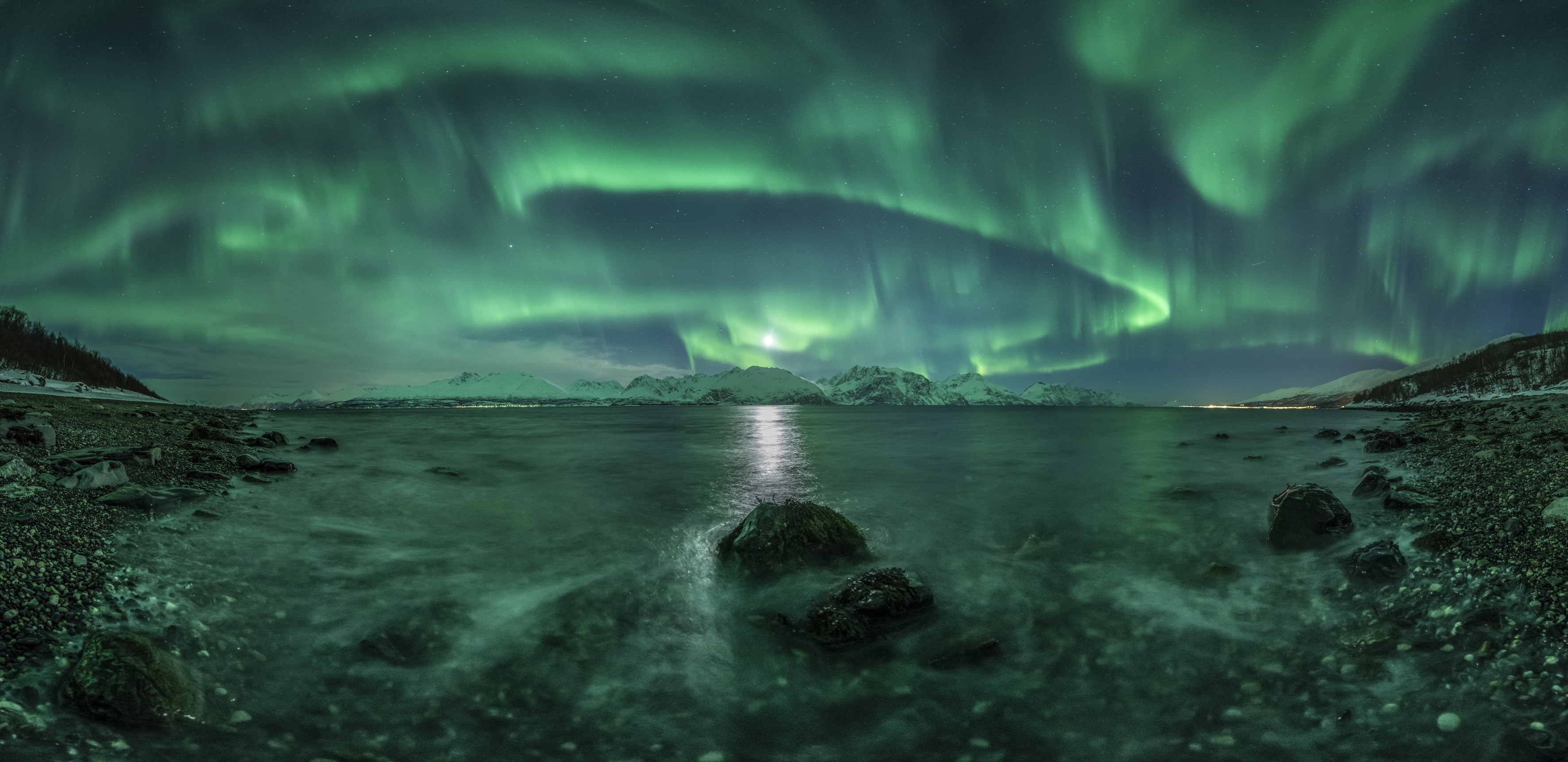
aurora panorama
This image was captured by Jan R. Olsen in Norway.

The image above is taken from the Huffington Post, which captioned the image as follows: “The vivid green Northern Lights dance above Lyngenfjord, the longest fjord in Troms county Norway, tracing out the shape of the Earth’s magnetic field above the waters. The most common colour associated with aurorae, the green is produced by oxygen atoms and molecules energised by the impact of solar particles that have escaped the Sun’s atmosphere, causing them to glow brightly.

You can find the image here.

Posted in Class | Tagged , | Comments Off on An Introduction

Introductory Post

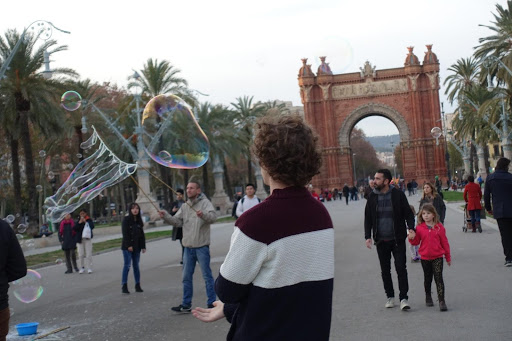
A Visit I made to Barcelona, Catalonia. By my brother.

Posted in Class | Tagged , | Comments Off on Introductory Post

Introduction

I would do this every day before I went on a bike ride in the Summer and post it on my private story for some reason (by me)

Hello! My name is Will Lopes (rhymes with ropes) and I’m from the Jersey Shore. I’m a freshman and am very undecided, but I like languages, so I will probably at least have a Spanish or Portuguese minor, but that’s all I know so far. I am super excited to take this class and be more knowledgable on our Solar System! Most importantly, I love Frank Ocean, so here is a playlist with every song he has released.

Posted in Class | Tagged , , | Comments Off on Introduction